
Biomechanical Assessment in Penrith
A structured look at how your feet, legs and lower limb are built and how they move - because abnormal lower-limb mechanics are a common cause of pain in the feet, ankles, knees and lower back.
- Standing & walking analysis
- Objective measurements
- Clear findings
- 60+Years Combined Experience
- 4.9Google Rating (185+)
- Specialist Podiatric Surgeon on team
- Endorsed for Scheduled Medicines
What a Biomechanical Assessment Involves
A biomechanical assessment is a detailed evaluation of the alignment, structure and function of your feet, legs and lower limb - both while standing still and during movement. Abnormal lower-limb biomechanics are one of the primary causes of pain and injury affecting the feet, ankles, knees, legs and lower back.
The goal is simple: identify exactly where your mechanics deviate from what is efficient, and connect that to the symptoms you are experiencing.
What We Examine
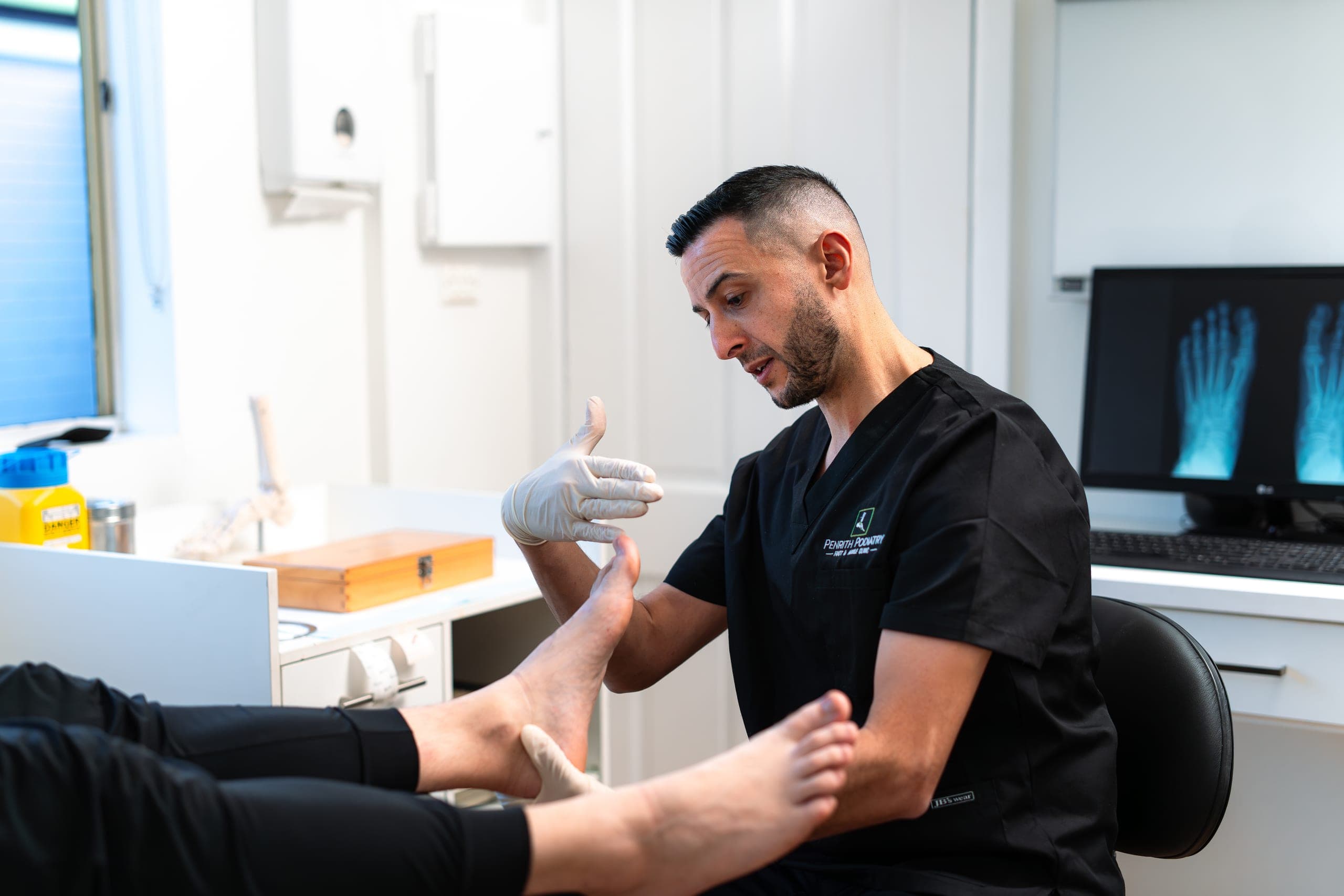
A full assessment typically includes:
Visual gait analysis
how your foot and leg move through each step
Lower-limb strength testing
identifying weakness that alters movement
Joint flexibility testing
range of motion through the foot, ankle and leg
Alignment assessment
of the foot, leg and knee in stance
Leg-length evaluation
checking for a discrepancy that loads one side
Forefoot-to-rearfoot relationship
how the front and back of the foot relate
What to expect.
Biomechanical Assessment, delivered in-clinic at Penrith
Book an AssessmentWhy It Matters
Cause, not symptom
we treat the mechanics driving the pain, not just where it hurts
Injury prevention
identifying anomalies helps minimise the risk of recurrence
Back to activity
a clear route back to pain-free movement or your chosen sport
Objective baseline
measurements we can track as your treatment progresses

Biomechanical Assessment FAQs
The questions patients ask us most about biomechanical assessment.
How is this different from a general foot assessment?
A biomechanical assessment focuses specifically on alignment and movement mechanics - measuring strength, flexibility, leg length and gait. It often forms part of a broader foot and ankle assessment, and is especially useful when pain is load- or activity-related.
Do I need a referral?
No referral is needed to book. If you have a Medicare EPC/chronic disease management plan or private health cover, bring the details and we'll help you use them.
What should I bring?
Wear or bring the shoes you spend most time in - including any sports shoes - and any orthotics you currently use. If you have relevant scans or reports, bring those too.
What happens after the assessment?
You'll get a clear explanation of the findings and a staged plan. Depending on what we find, that may include orthotic therapy, footwear changes, a strengthening programme, or onward treatment such as shockwave or foot mobilisation.

Serving Penrith & Western Sydney
Penrith Podiatry Foot and Ankle Clinic is at 1/135-137 High Street, Penrith, seeing patients from Kingswood, St Marys, Glenmore Park, Emu Plains, Werrington and the Blue Mountains. If pain keeps returning, a biomechanical assessment is the place to start.
Related services
Foot & Ankle Assessment
Comprehensive biomechanical and clinical evaluation to pinpoint the root cause of foot, ankle and lower-limb pain.
Learn moreGait Analysis
Non-invasive analysis of how you walk and run, used to pinpoint the mechanical faults behind pain and recurring sports injuries.
Learn moreOrthotic Therapy
Custom-prescribed orthoses to offload, support and correct the foot mechanics driving your pain.
Learn moreRequest an appointment
Send a few details and our team will be in touch to arrange a time that suits you.
Visit the clinic
Penrith, NSW 2750