
Plantar Plate Tear Treatment in Penrith
Persistent pain under the ball of your foot, like a marble underfoot, with a toe that seems to be floating upward? A plantar plate tear is frequently missed for months - accurate diagnosis changes everything.
- In-clinic diagnostic ultrasound
- Taping & offloading
- Surgical repair when needed
- 60+Years Combined Experience
- 4.9Google Rating (185+)
- Specialist Podiatric Surgeon on team
- Endorsed for Scheduled Medicines
What Is a Plantar Plate Tear?
The plantar plate is a thick, fibrocartilaginous ligament on the underside of each lesser toe joint. It stabilises the toe - preventing it from bending upward excessively - and protects the joint from the high forces that pass through the forefoot with every step.
A plantar plate tear occurs when this structure is overstressed, partially torn or completely ruptured. The second toe is most commonly affected. Without the plantar plate to stabilise it, the toe progressively migrates upward and may begin to cross over or under the adjacent toe.
Plantar plate injuries are frequently misdiagnosed or managed as general forefoot pain for months before the correct diagnosis is made - and accurate diagnosis changes management significantly.

What Causes Plantar Plate Tears?
Contributing factors include:
Toe hyperextension
Repetitive hyperextension of the toe, particularly in runners and people often on tiptoe
Long metatarsal
A long second metatarsal relative to the first, overloading the second toe joint
Adjacent bunion
Hallux valgus (bunion), shifting load from the first to the second toe joint
High-heel loading
Unsupportive footwear or high heels, increasing forefoot loading
Acute trauma
Acute trauma from forced dorsiflexion of the toe
Inflammatory arthritis
Inflammatory arthritis causing joint-capsule weakening
Symptoms

Under-toe pain
Pain under the ball of the foot at the base of the second (or third) toe
Marble sensation
A feeling of walking on a lump or marble under the forefoot
Joint swelling
Swelling around the affected toe joint
Floating toe
The toe appearing to float upward or drift sideways
Weak push-off
Difficulty pushing off through the toe
Toe gap (V-sign)
A gap between the second and third toes (V-sign) in advanced cases
How Is It Diagnosed?
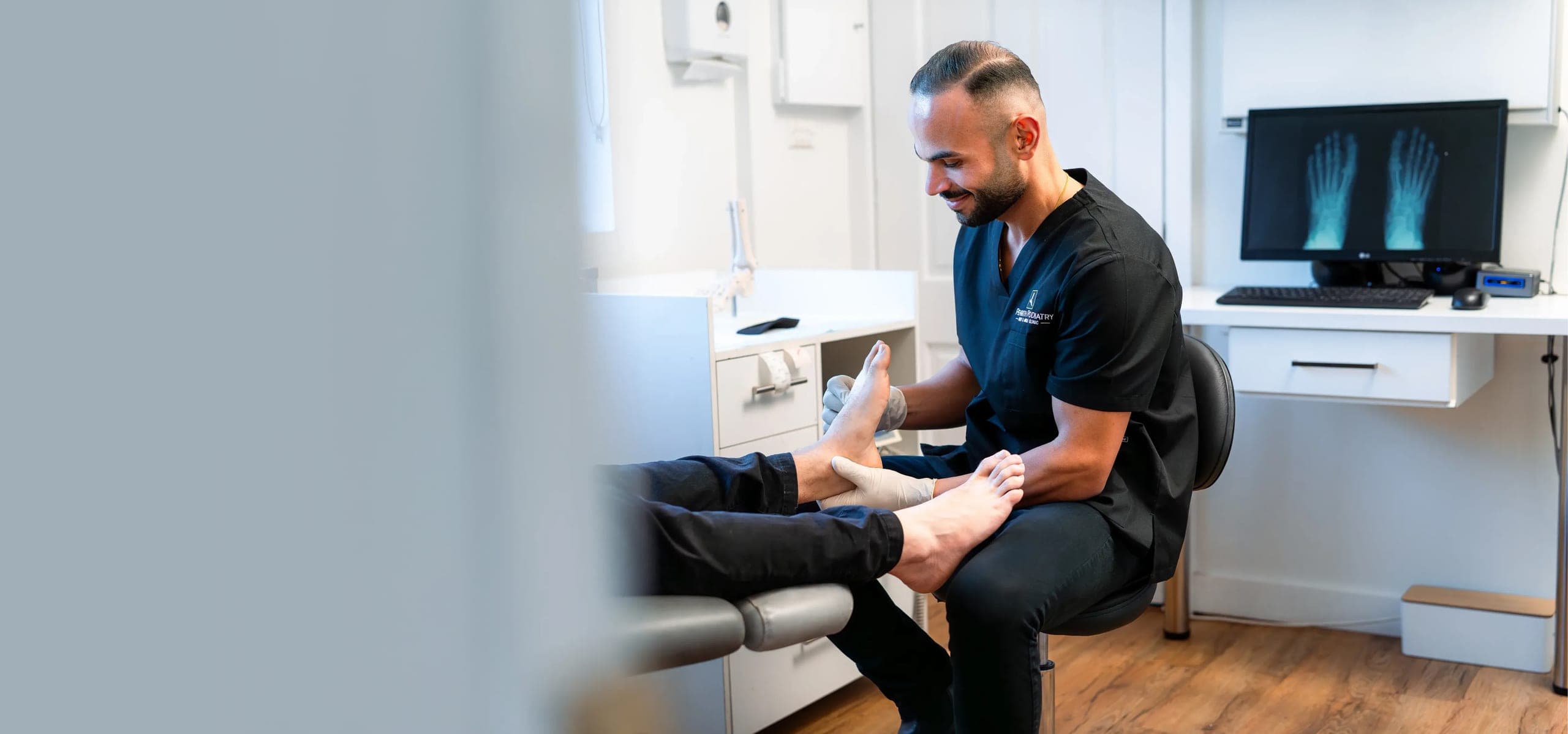
Accurate diagnosis requires both clinical testing and imaging. Assessment includes:
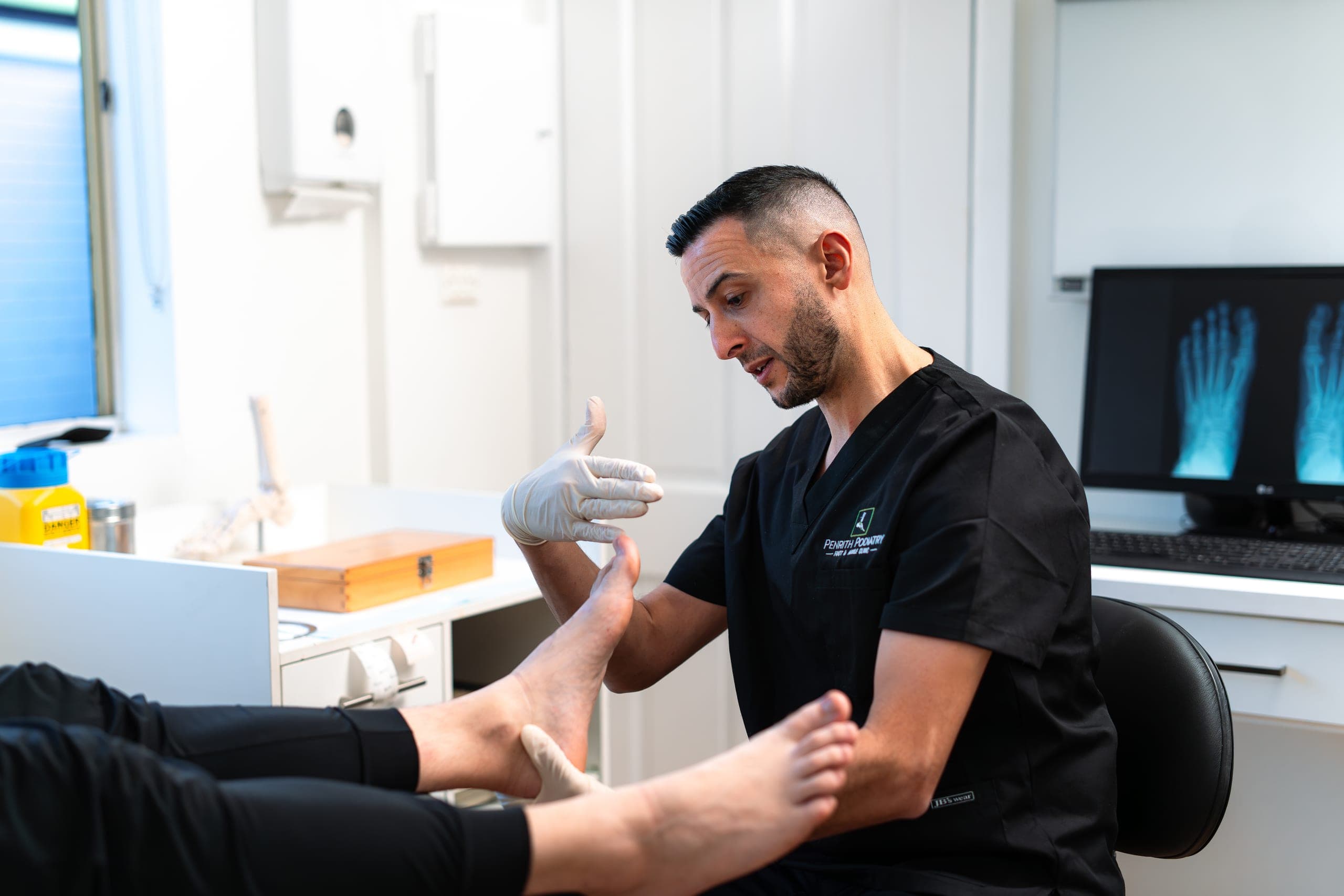
Drawer test
a specific provocation test for plantar plate integrity
Alignment check
assessing toe deviation and dorsal displacement
Forefoot loading
and biomechanical analysis
In-clinic ultrasound
the primary tool - identifies partial or full-thickness tears, effusion and synovitis
MRI referral
for the most detailed assessment of tear extent and adjacent structures
Conservative Treatment
Many plantar plate injuries, particularly partial tears, respond well to conservative management when identified and treated appropriately. Treatment includes:
- Toe taping & strapping - taping the toe in a downward position to reduce strain and allow partial healing - a cornerstone that must be done correctly and consistently
- Metatarsal offloading padding - reducing peak pressure through the affected joint
- Orthotics with a metatarsal bar - redistributing forefoot load away from the injured joint
- Stiff-soled footwear - reducing the dorsiflexion force through the toe during push-off
- Activity modification - reducing barefoot and high-impact forefoot loading during recovery
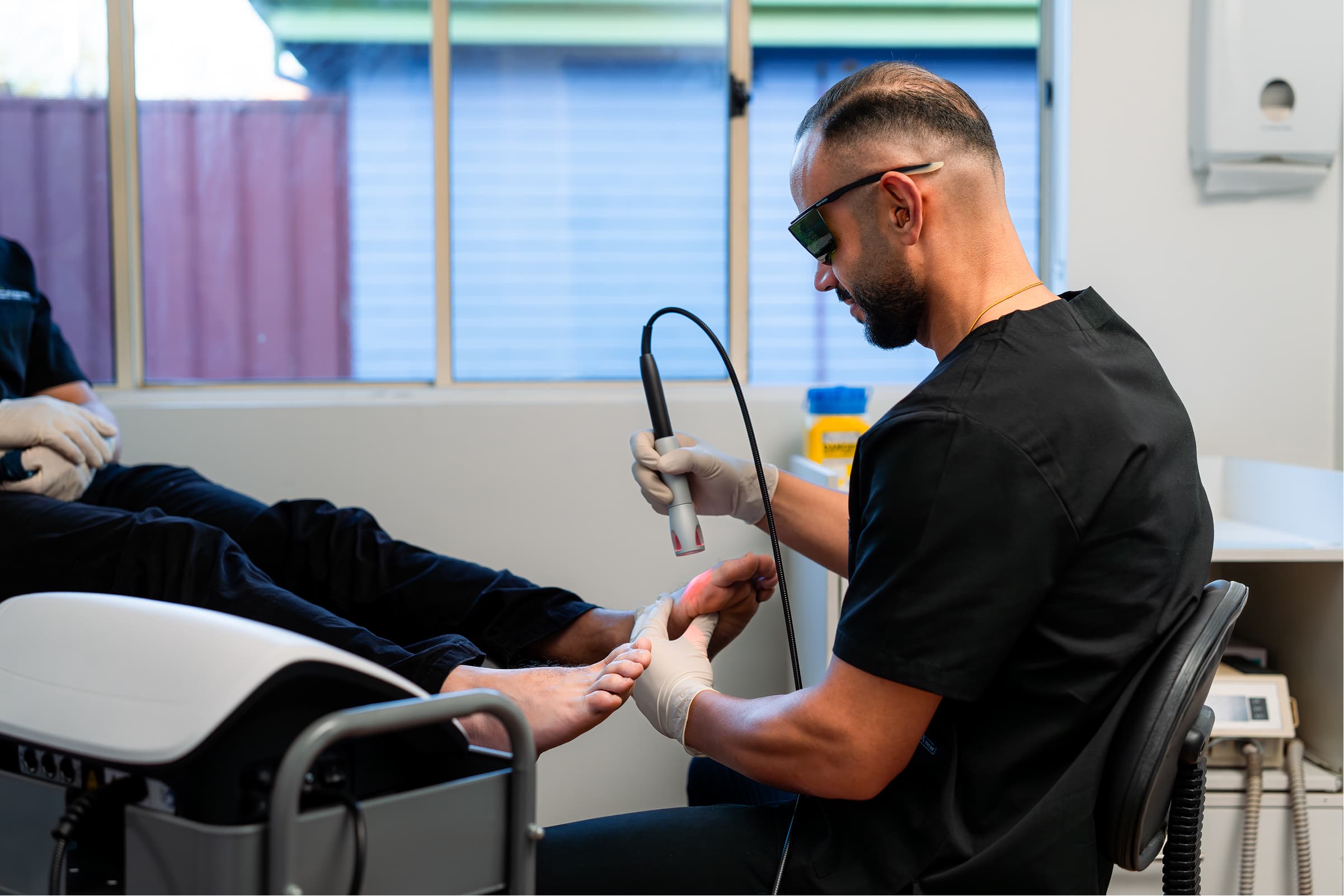
- Ultrasound-guided injection - for significant synovitis or pain not responding to mechanical management
Conservative management requires patience and consistency - partial tears can take 3-6 months of structured management to stabilise.
When Surgery Is Considered
For complete tears, significantly displaced or crossed toes, or cases that haven't responded to thorough conservative care, surgical repair or reconstruction may be indicated. Plantar plate repair re-anchors the torn ligament to the base of the proximal phalanx, often combined with correction of any associated bony deformity.
Plantar Plate Tears FAQs
How do I know if I have a plantar plate tear and not Morton's neuroma?
Both cause forefoot pain but the character differs. Plantar plate pain is typically directly under the toe joint, worsens with toe extension, and comes with toe deviation. Morton's neuroma produces burning or electric pain between the metatarsals radiating into the toes. Ultrasound is the key diagnostic tool.
Can a plantar plate tear heal without surgery?
Partial tears frequently heal with conservative management including consistent taping, offloading and activity modification. Complete tears with significant toe displacement typically require surgical repair.
How long does taping need to be worn?
For the best chance of success, taping needs to be worn consistently for a minimum of 6-12 weeks. Your podiatrist will show you the correct technique and review regularly.
Is it serious if my toe is crossing over the next toe?
Yes. A toe visibly drifting or crossing indicates the plantar plate has failed to maintain alignment. This warrants prompt assessment as the deformity tends to worsen over time without intervention.

Serving Penrith & Western Sydney
Penrith Podiatry Foot and Ankle Clinic is at 1/135-137 High Street, Penrith, diagnosing and managing plantar plate injuries for patients across Western Sydney. If you have persistent pain under the ball of your foot with a toe that seems to be drifting upward, don't leave it unassessed - book online or call us.
Related conditions
Morton's Neuroma
Burning, shooting forefoot pain like walking on a pebble - a compressed, thickened nerve.
Learn moreForefoot Pain
Pain in the ball of the foot - a symptom pattern with several causes, almost always treatable conservatively.
Learn moreHammer Toes
A toe bent at the middle joint - flexible deformities are easier to manage than rigid ones.
Learn moreRequest an appointment
Send a few details and our team will be in touch to arrange a time that suits you.
Visit the clinic
Penrith, NSW 2750