
Ankle Arthritis Treatment in Penrith
Deep ankle pain, morning stiffness, and a joint that's slowly losing motion? Ankle arthritis develops over years - and early intervention can meaningfully slow it and preserve function for longer.
- Weight-bearing X-ray review
- Bracing & orthotic therapy
- Ultrasound-guided injections
- 60+Years Combined Experience
- 4.9Google Rating (185+)
- Specialist Podiatric Surgeon on team
- Endorsed for Scheduled Medicines
What Is Ankle Arthritis?
Ankle arthritis is a degenerative condition involving the breakdown of cartilage within the ankle joint - the smooth, cushioning tissue that lets the bones glide against each other. When it wears away, bone contacts bone, causing pain, stiffness, swelling and progressive loss of function.
The ankle joint is less commonly affected by primary osteoarthritis than the hip or knee. In most cases ankle arthritis develops as a consequence of a previous injury - a fracture, repeated sprains, or chronic instability that was never properly managed. This 'post-traumatic' arthritis accounts for the majority of presentations.
It develops and worsens over years, not weeks. Early intervention can meaningfully slow progression and preserve function for longer.

Types and Causes
Ankle arthritis has a few distinct drivers:
Post-traumatic
the most common type - following fractures, ligament injuries or chronic instability
Inflammatory
rheumatoid, psoriatic arthritis and gout can accelerate cartilage breakdown
Primary osteoarthritis
age-related cartilage wear, less common in the ankle than other joints
Symptoms
Deep joint pain
Deep, aching pain inside the ankle joint, particularly with weight-bearing
Morning stiffness
Stiffness that's worst first thing in the morning or after sitting
Swelling
Swelling around the ankle, particularly after activity
Reduced motion
Reduced range of motion, making walking on uneven ground difficult
Grinding & clicking
A feeling of grinding, catching or clicking within the joint
Progressive pain
Pain that progressively worsens over months to years
Assessment
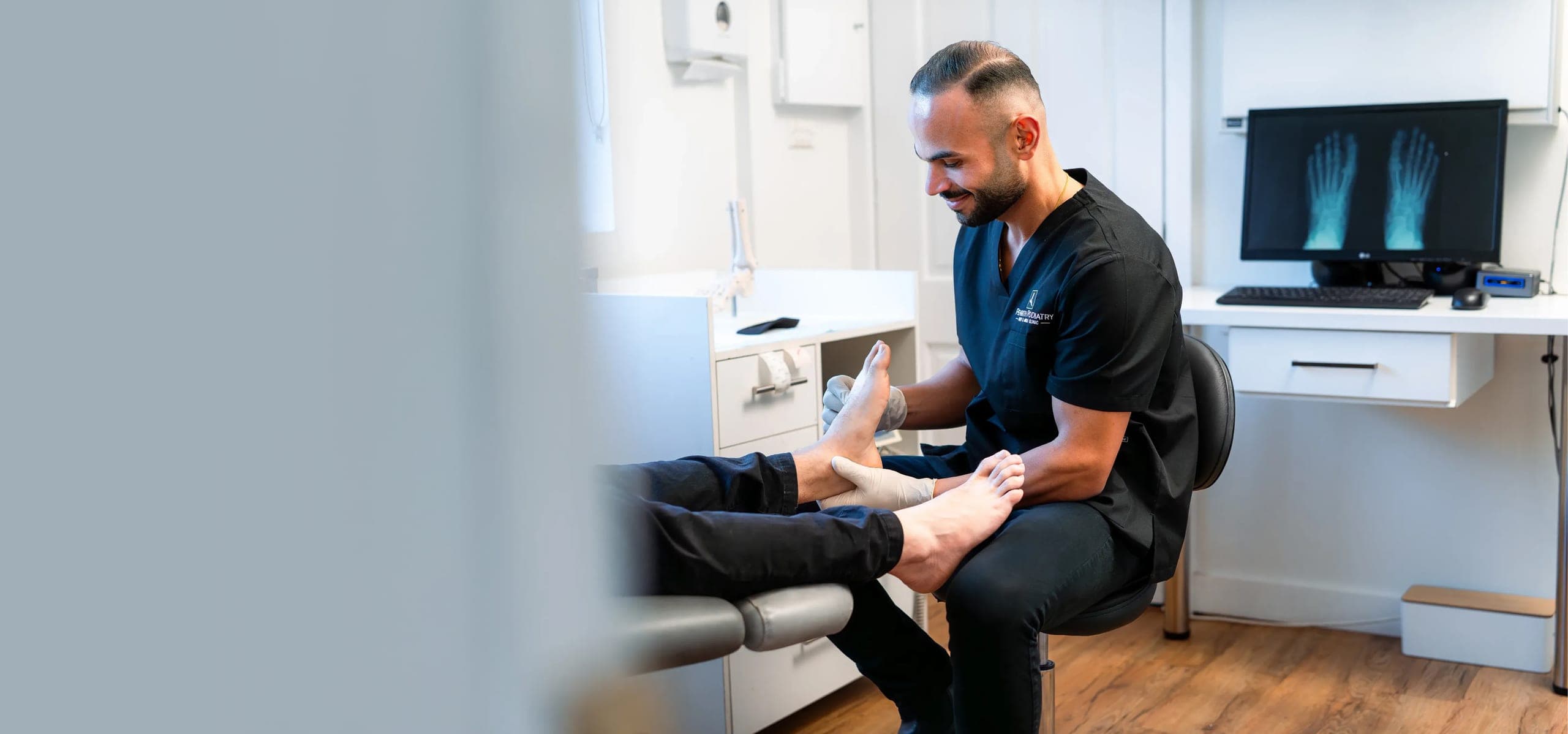
Assessment at Penrith Podiatry includes:
History
prior ankle injuries, activity levels and symptom progression
Examination
of joint range, swelling and alignment
Gait analysis
how arthritis is affecting your walking mechanics
Weight-bearing X-ray
showing joint-space narrowing, bone spurs and deformity under load
In-clinic ultrasound
assessing synovial inflammation and joint effusion
CT / MRI referral
where detailed cartilage or bone assessment is required
Conservative Treatment
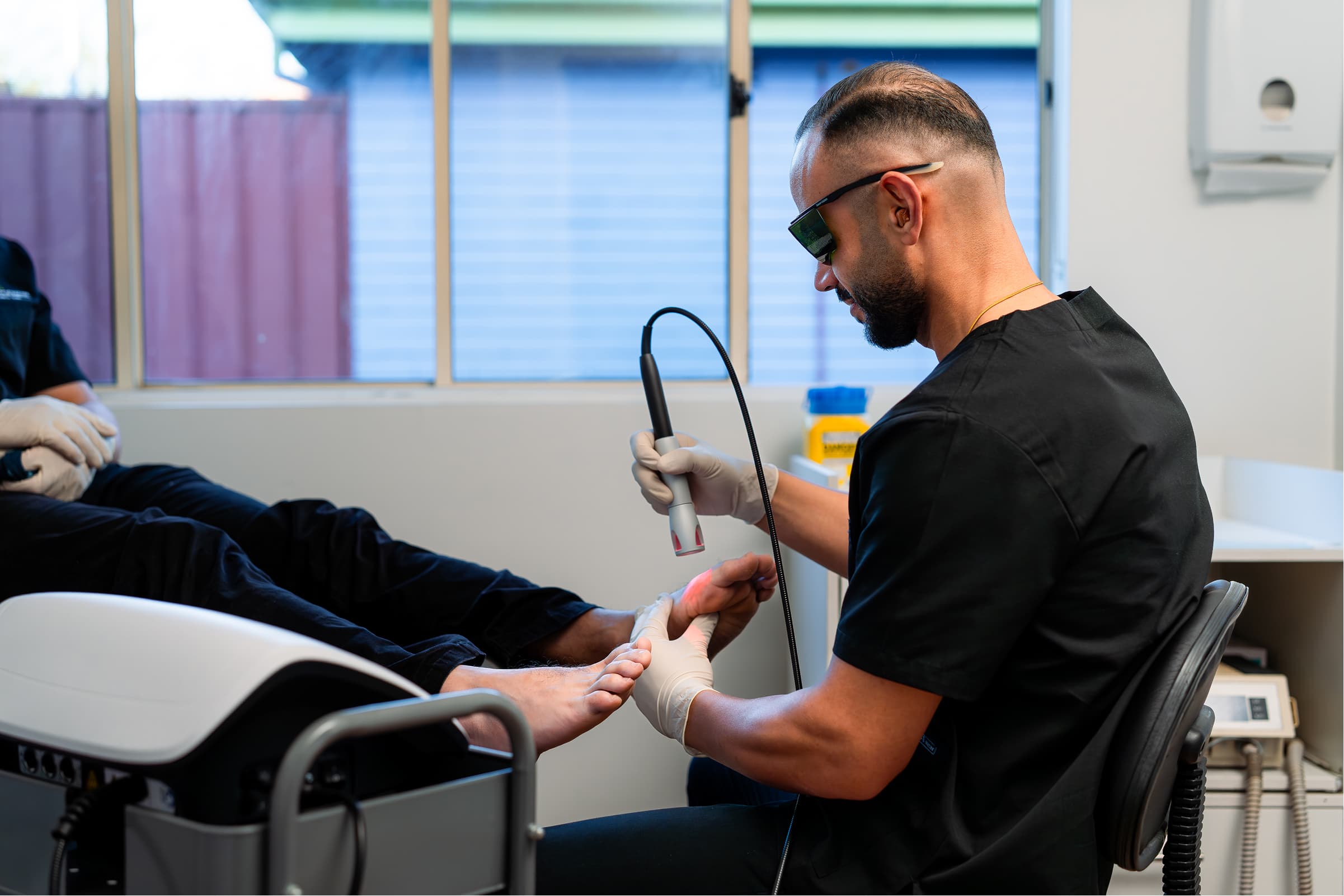
Conservative management reduces pain, maintains mobility and slows progression - for many patients it provides meaningful relief for years. Options include:
- Bracing & orthoses - custom orthotics or an AFO (Arizona brace) to limit painful motion, redistribute load and improve alignment - significant relief for moderate-severe arthritis
- Footwear modification - stiff-soled, rocker-bottom footwear reduces demand on the ankle during walking - one of the most effective measures
- Activity modification - reducing high-impact activity while maintaining low-impact movement like cycling or swimming
- Strengthening - maintaining the muscles around the ankle to compensate for joint instability
- Ultrasound-guided corticosteroid injection - reducing synovial inflammation and pain during flare-ups
- Weight management - reducing mechanical load through the joint is one of the most impactful long-term strategies
When Surgery Is Considered
When conservative measures no longer adequately manage the arthritis and quality of life is significantly affected, surgical options include ankle arthroscopy (for early-stage disease with loose bodies or spurs), total ankle replacement (preserving motion with a prosthetic implant), and ankle arthrodesis or fusion (eliminating motion but reliably reducing pain - the gold standard for end-stage arthritis). Surgical planning is managed with an orthopaedic or foot and ankle surgeon, and your podiatrist will guide you through the options and coordinate referral.
Ankle Arthritis FAQs
Can ankle arthritis be reversed?
Cartilage loss cannot be reversed. However, conservative management can significantly reduce pain, maintain function and slow further progression for many years.
Is exercise good or bad for ankle arthritis?
Low-impact exercise is generally beneficial. Swimming, cycling and walking on even surfaces maintain mobility and muscle strength without excessive load. High-impact activity should be modified based on symptom response.
Will I eventually need surgery?
Not necessarily. Many patients manage ankle arthritis conservatively for years. Surgery is considered when conservative measures no longer provide adequate quality of life - a patient-led decision made with the clinical team.
What's the difference between ankle replacement and ankle fusion?
Replacement preserves motion at the cost of a prosthetic implant with a finite lifespan. Fusion eliminates motion but provides very reliable, durable pain relief. Which is appropriate depends on age, activity level, bone quality and deformity.

Serving Penrith & Western Sydney
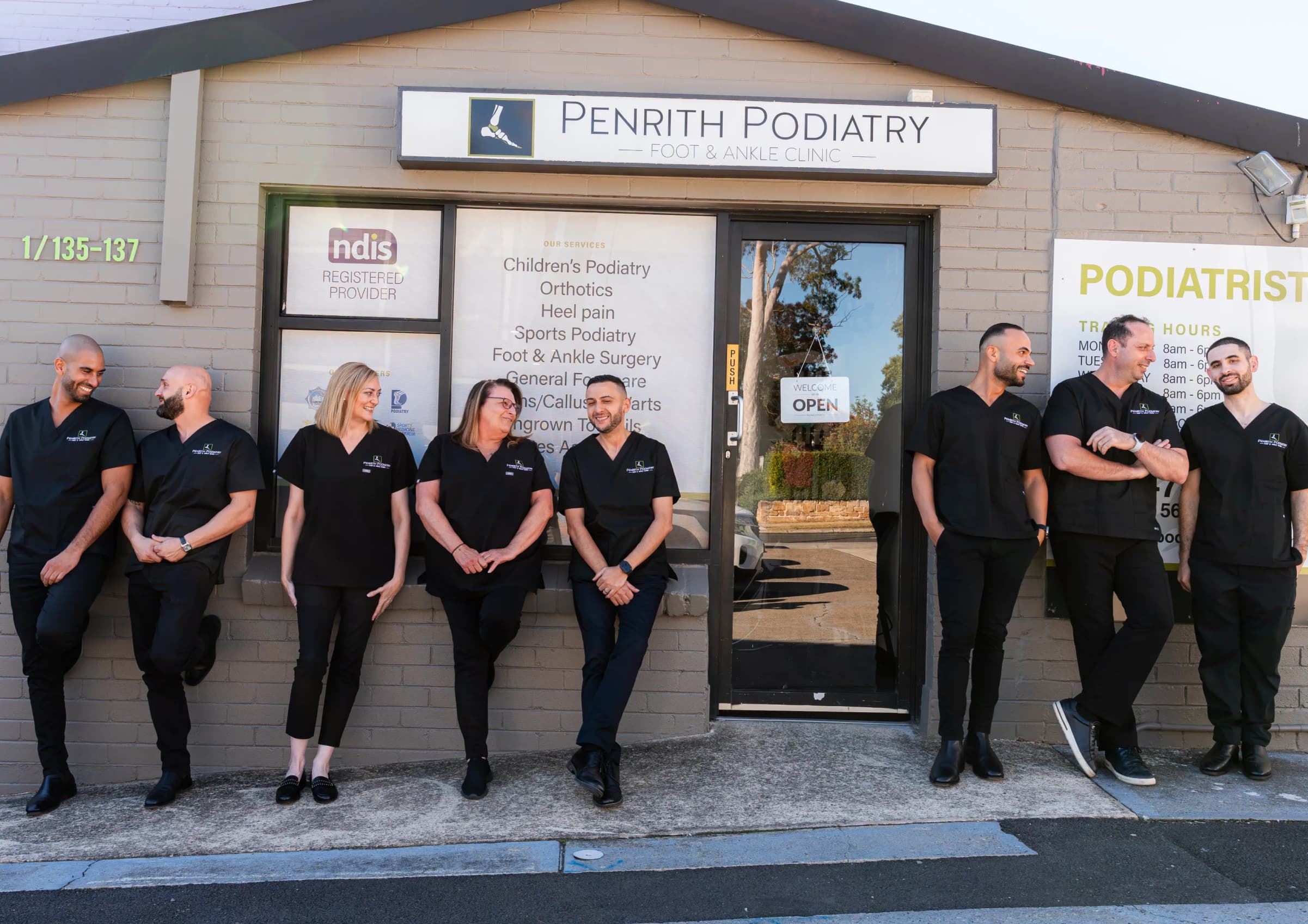
Penrith Podiatry Foot and Ankle Clinic is at 1/135-137 High Street, Penrith, helping patients across Western Sydney manage ankle arthritis with strategies that preserve function and quality of life. If your ankle pain has been getting progressively worse, early assessment makes a meaningful difference.
Related conditions
Ankle Instability
An ankle that keeps giving way after a sprain - rehab resolves most cases, surgery stabilises the rest.
Learn moreFlat Feet
Reduced or absent arches - often harmless, sometimes progressive. Assessment tells you which.
Learn morePTTD
Progressive failure of the tendon that supports the arch - early diagnosis avoids reconstruction.
Learn moreRequest an appointment
Send a few details and our team will be in touch to arrange a time that suits you.
Visit the clinic
Penrith, NSW 2750