Morton's Neuroma Treatment in Penrith
Burning, shooting pain in the ball of your foot that eases when you take your shoes off? Morton's neuroma is a compressed, thickened nerve - and it responds well to treatment when addressed early.
- In-clinic diagnostic ultrasound
- Ultrasound-guided injections
- Footwear & orthotic therapy
- 60+Years Combined Experience
- 4.9Google Rating (185+)
- Specialist Podiatric Surgeon on team
- Endorsed for Scheduled Medicines
What Is Morton's Neuroma?
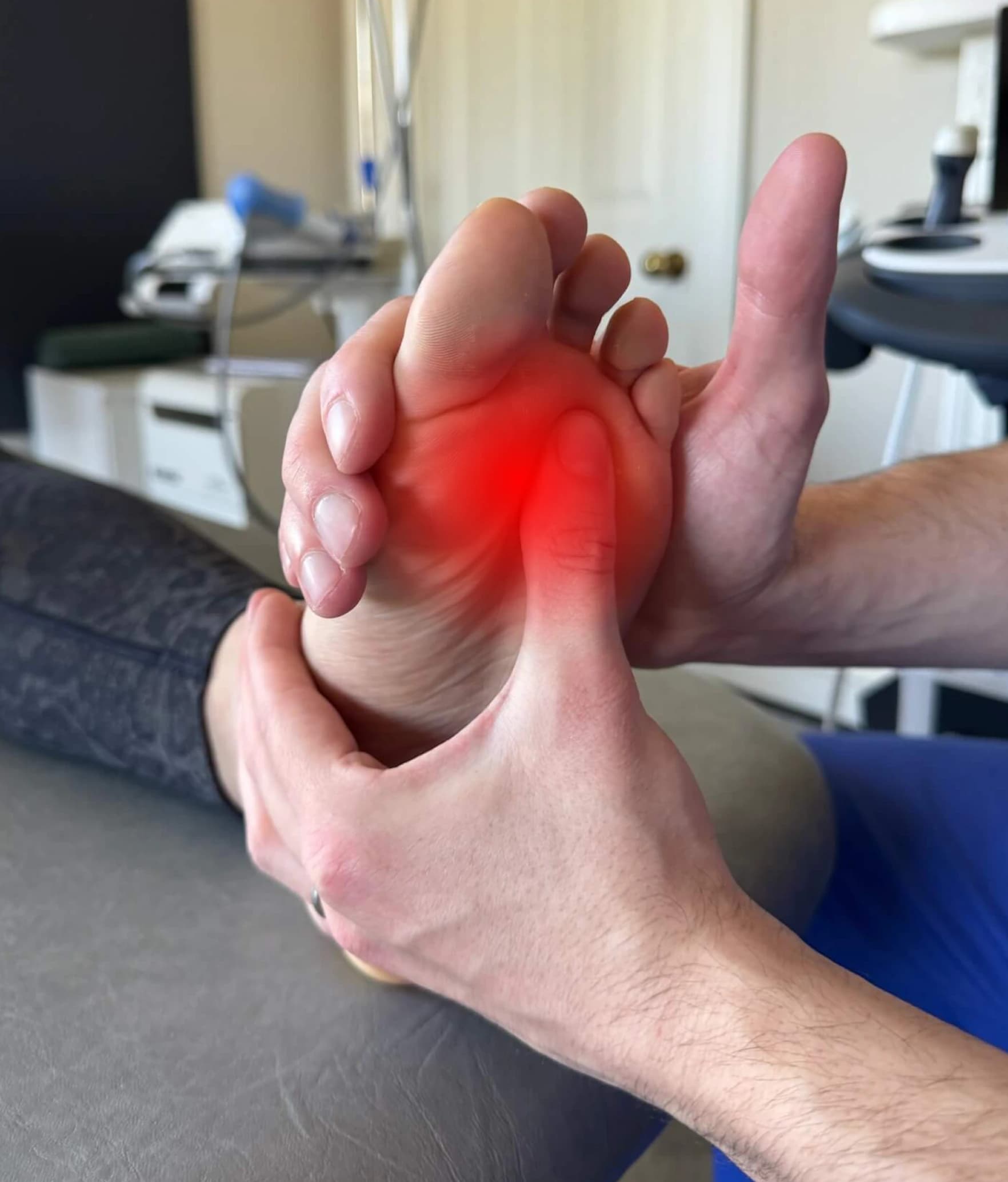
Morton's neuroma is a painful condition affecting the nerves that run between the long bones (metatarsals) of the foot. Despite its name it is not a true tumour - it's a thickening of the tissue surrounding the nerve, caused by irritation and compression over time.
It most commonly develops between the third and fourth metatarsals, though it can also occur between the second and third. The thickened nerve tissue causes burning, shooting pain and numbness in the ball of the foot and toes.
It is more common in women, particularly those who regularly wear narrow or high-heeled footwear, and it also affects active people in sports with repetitive forefoot loading.
What Causes It?
The nerve between the metatarsals passes through a narrow channel under a ligament. When the metatarsals are squeezed together repeatedly, the nerve is compressed and eventually thickens in response. Contributing factors include:
Narrow footwear
Footwear with a narrow toe box that compresses the forefoot
High heels
High heels, which transfer load forward into the ball of the foot
Foot mechanics
Biomechanical factors including excessive pronation or forefoot instability
Sport loading
Repetitive forefoot loading in sport (running, court sports, cycling)
Forefoot splay
A wider forefoot or hypermobile joints that increase metatarsal splay
Previous injury
Previous forefoot injury or surgery
Symptoms

Burning nerve pain
Burning, shooting or electric pain in the ball of the foot, radiating into the third and fourth toes
Pebble sensation
A sensation of walking on a pebble or a bunched-up sock
Numbness & tingling
Numbness or tingling in the affected toes
Worse in tight shoes
Pain that worsens with tight footwear and eases when shoes are removed
Eased by massage
Relief when the forefoot is massaged or the toes are spread apart
Worse through the day
Symptoms that worsen through the day with activity
How Is It Diagnosed?
Assessment at Penrith Podiatry includes:
Clinical history
and careful characterisation of your symptoms
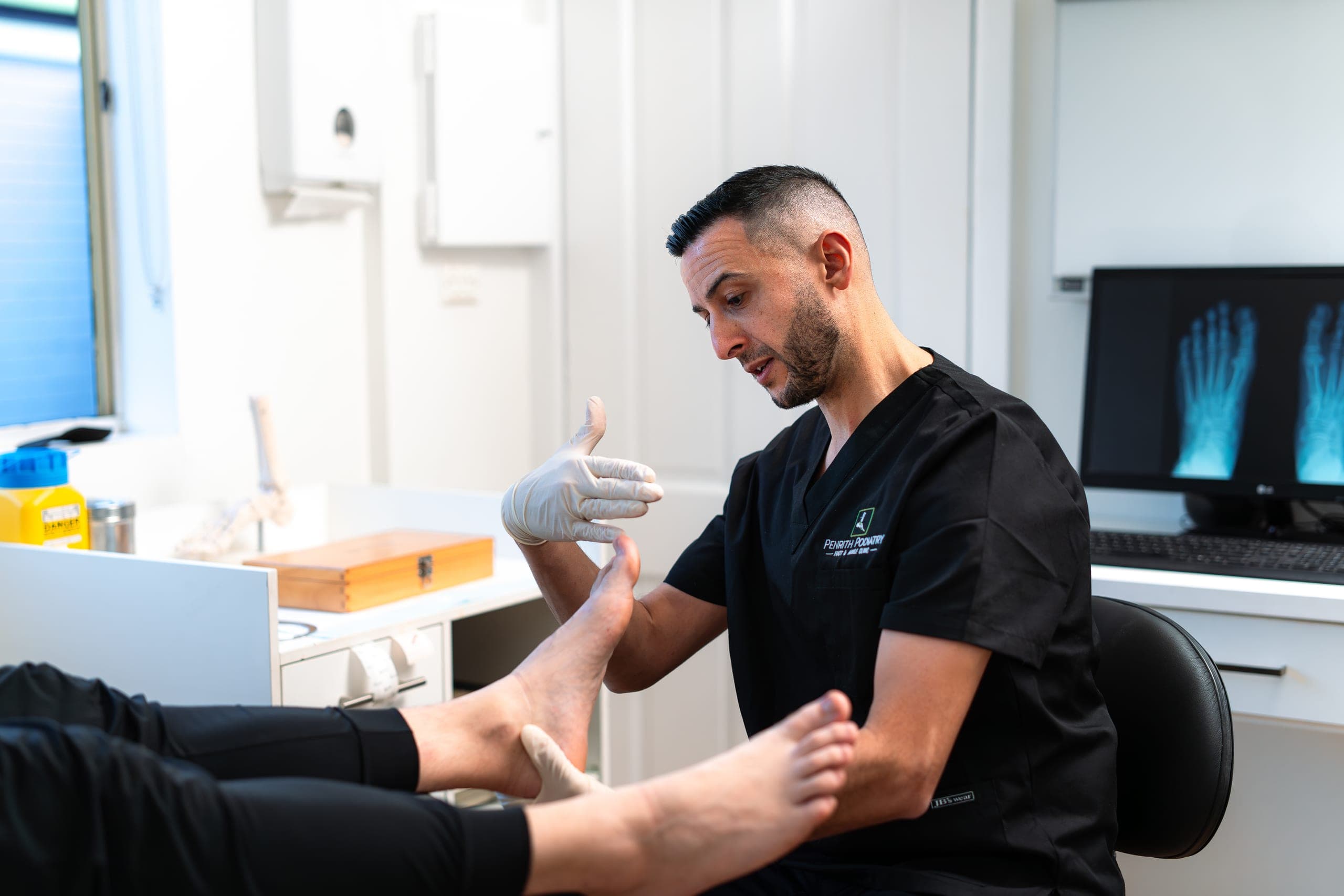
Mulder's click test
a specific clinical test for Morton's neuroma, with forefoot palpation
Forefoot mechanics
assessment of metatarsal mobility and loading
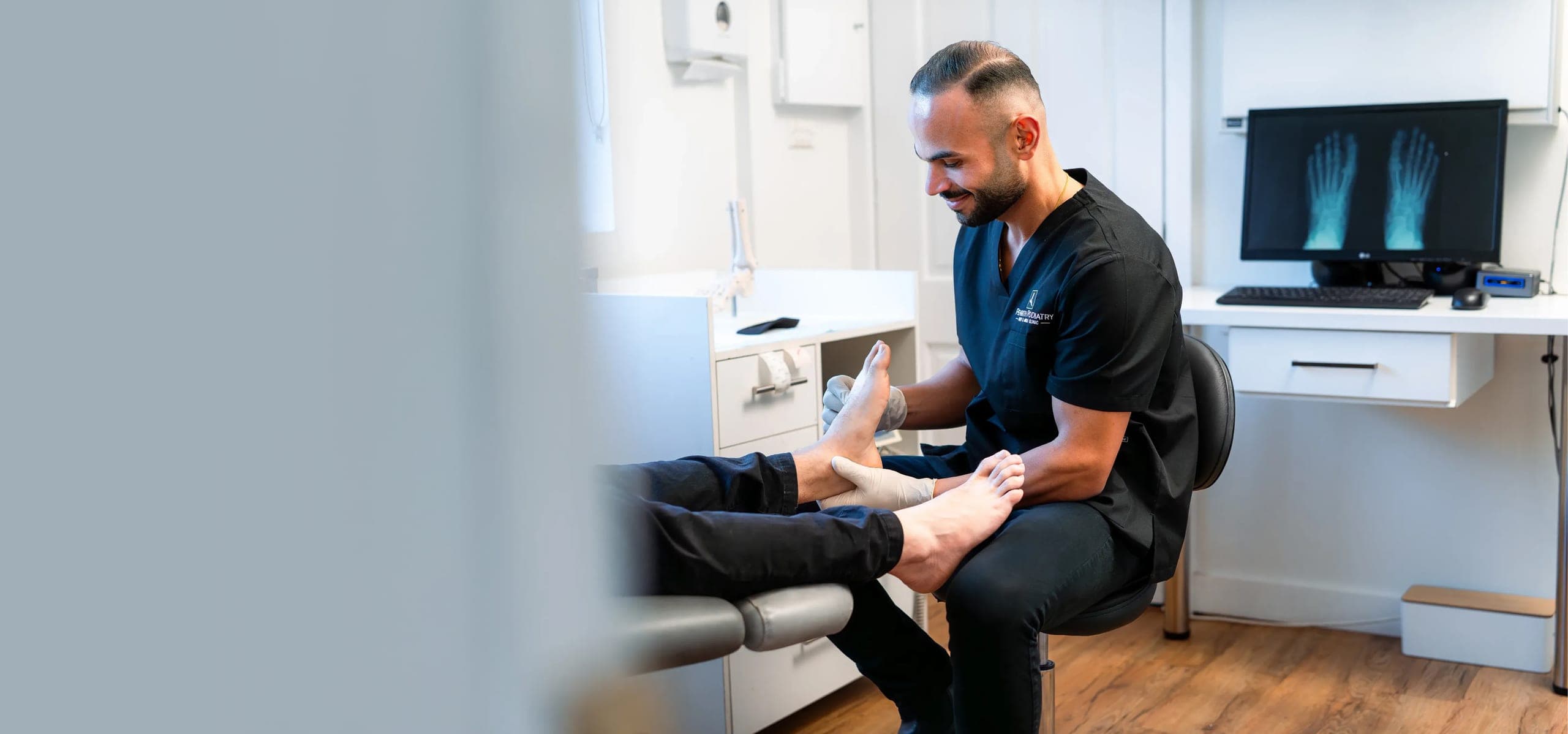
In-clinic ultrasound
the primary imaging tool - identifies the thickened nerve, measures its size, and guides injection treatment
MRI referral
if the diagnosis is uncertain or other pathology needs excluding
Conservative Treatment
Most presentations respond well to conservative measures, particularly when addressed before the nerve has become significantly enlarged. Options include:
- Footwear modification - widening the toe box is the single most important measure - it lets the forefoot spread and reduces metatarsal compression
- Metatarsal padding & offloading - strategically placed padding spreads the metatarsal heads and reduces pressure on the nerve
- Custom foot orthotics - addressing biomechanical contributors including forefoot pronation and arch collapse
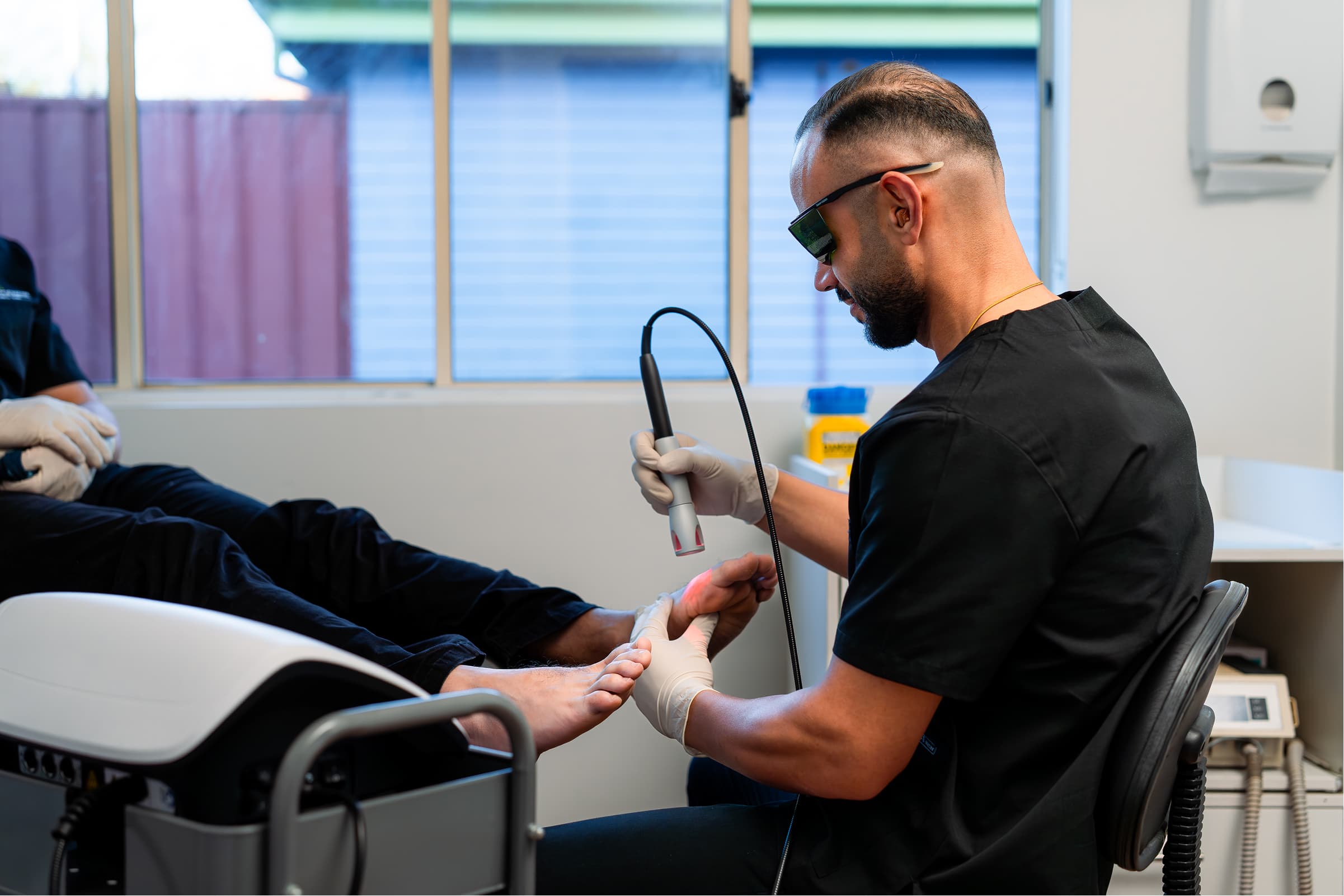
- Ultrasound-guided corticosteroid injection - highly effective for reducing inflammation and perineural fibrosis, placed precisely under imaging
- Alcohol sclerosing injections - an alternative for chronic or recurrent cases, guided by ultrasound
- Activity modification - reducing high-impact forefoot loading during active treatment
When Surgery Is Considered
For patients who don't respond to footwear modification and ultrasound-guided injections, surgical options include neurectomy (removing the affected nerve segment - resolves pain but leaves permanent toe numbness) or nerve decompression (dividing the intermetatarsal ligament to relieve pressure while preserving sensation).
Morton's Neuroma FAQs
Can Morton's neuroma go away on its own?
In mild cases, symptoms improve significantly with footwear changes alone. If the nerve has become substantially thickened, injection therapy is usually needed.
Are the injections painful?
Ultrasound-guided injections are well tolerated by most patients. Imaging guidance improves both accuracy and comfort compared with an unguided injection.
Will I lose feeling in my toes after surgery?
If a neurectomy is performed, there will be permanent numbness in the affected toes - most patients consider this an acceptable trade-off. Nerve decompression is an alternative that preserves sensation.
How do I know if it's Morton's neuroma or something else?
Forefoot pain has several causes. Clinical testing (including Mulder's click test) and diagnostic ultrasound will identify the specific diagnosis.
Serving Penrith & Western Sydney
Penrith Podiatry Foot and Ankle Clinic is at 1/135-137 High Street, Penrith, seeing patients with forefoot nerve pain from Kingswood, St Marys, Emu Plains, Glenmore Park and Nepean. If you have burning pain or numbness in the ball of your foot that worsens in shoes, have it assessed promptly.
Related conditions
Forefoot Pain
Pain in the ball of the foot - a symptom pattern with several causes, almost always treatable conservatively.
Learn morePlantar Plate Tears
A torn stabilising ligament under a toe joint - often mistaken for general forefoot pain.
Learn moreNerve Pain / Tarsal Tunnel
Nerve entrapment at the inner ankle causing burning, tingling and numbness in the sole.
Learn moreRequest an appointment
Send a few details and our team will be in touch to arrange a time that suits you.
Visit the clinic
Penrith, NSW 2750