Hammer Toe Treatment in Penrith
A toe that's bending at the middle joint, rubbing in shoes and building corns? Hammer toes are progressive - treating a flexible deformity early is always easier than managing a rigid one.
- Weight-bearing X-ray review
- Splinting & offloading
- Surgical referral when needed
- 60+Years Combined Experience
- 4.9Google Rating (185+)
- Specialist Podiatric Surgeon on team
- Endorsed for Scheduled Medicines
What Are Hammer Toes?
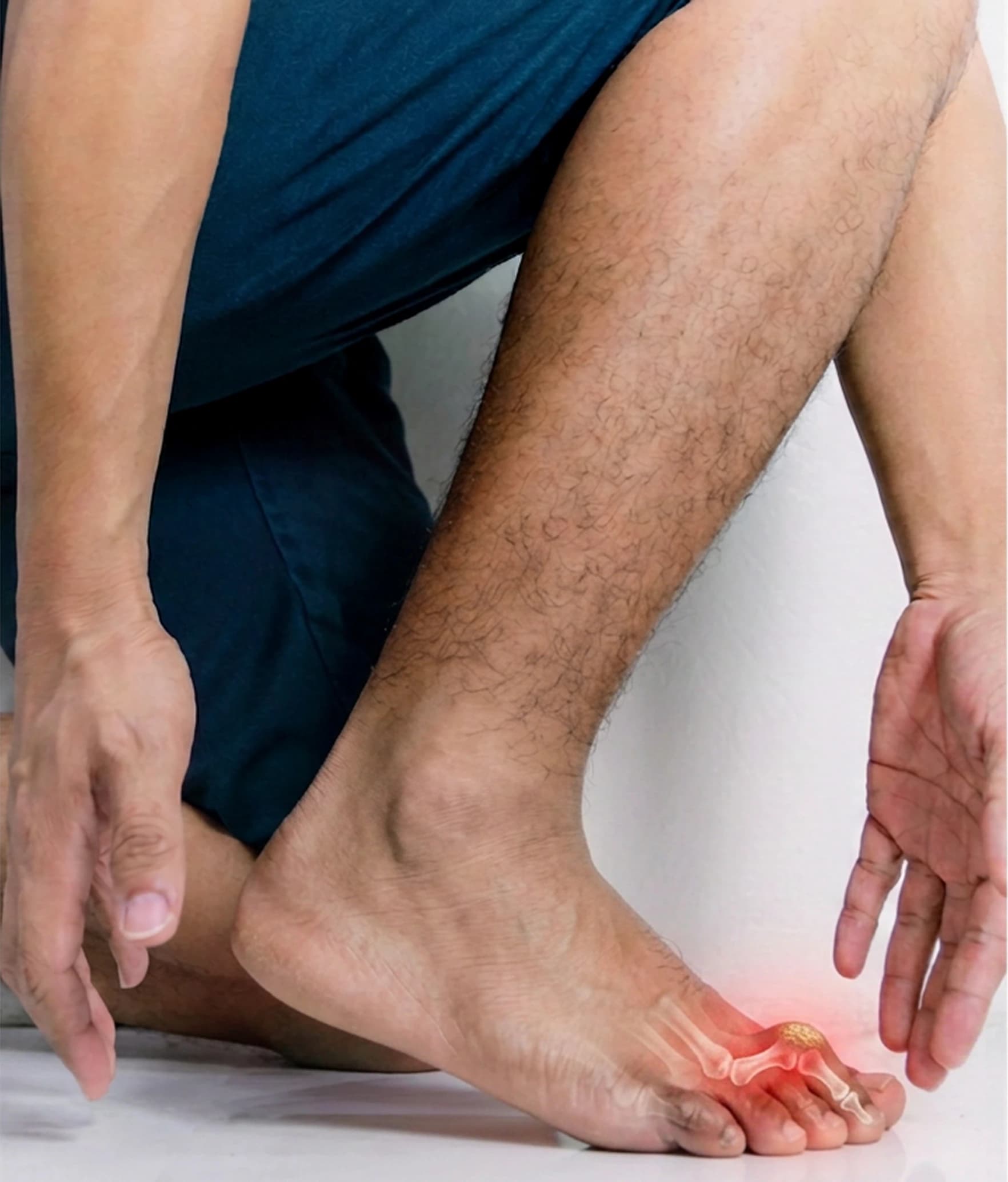
A hammer toe is a deformity of one or more of the lesser toes (toes two to five) where the toe bends downward at the middle joint, creating a hammer or claw-like shape. In a flexible hammer toe the toe can still be straightened manually; in a rigid hammer toe the deformity has become fixed and can no longer be corrected by pressure alone.
Hammer toes are progressive - they rarely stay the same over time. Left unmanaged, a flexible deformity becomes rigid, causing increasing pain, skin breakdown and difficulty with footwear.
What Causes Hammer Toes?
Hammer toes develop from an imbalance between the muscles and tendons that control toe position. Contributing factors include:
Tight footwear
Footwear that's too tight, too short or high-heeled, forcing the toes into a flexed position over years
Adjacent bunion
A bunion (hallux valgus) that pushes the second toe out of alignment
Long second toe
An unusually long second toe that buckles under footwear pressure
Foot type
Flat feet or high arches, which alter how the forefoot loads and how the toes function
Nerve imbalance
Neurological conditions affecting muscle balance in the foot
Inflammatory arthritis
Inflammatory arthritis causing joint changes in the toes
Symptoms
Bent toe
A visible bend at the middle joint of one or more toes
Footwear rubbing
Pain or rubbing on the top of the bent joint from footwear contact
Corns & callus
Callus or corn formation on the top or tip of the toe
Footwear trouble
Difficulty finding comfortable footwear
Crossing toe
In advanced cases, a toe that crosses over or under an adjacent toe
Skin breakdown
Skin breakdown over the prominence in patients with neuropathy or poor circulation
Assessment
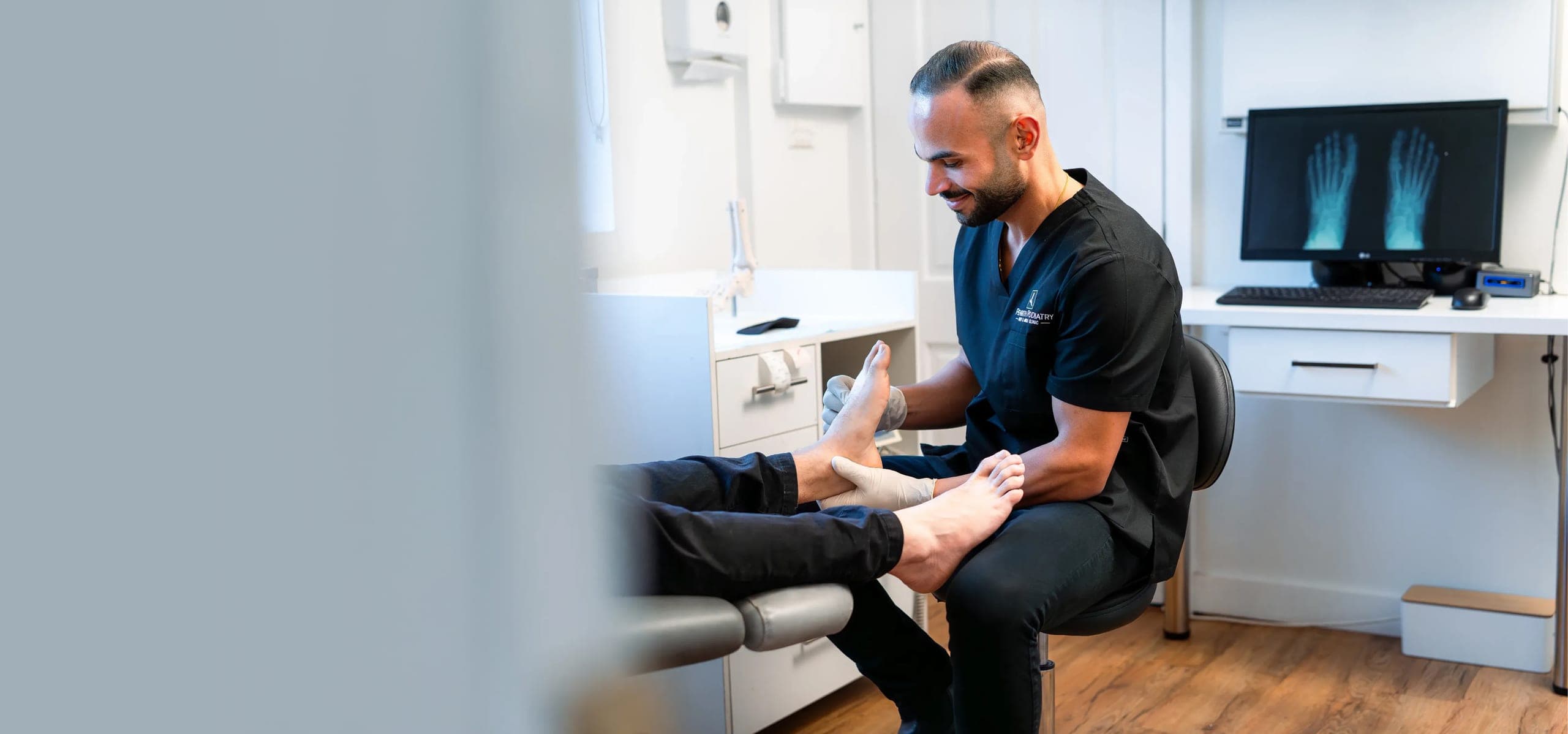
Assessment at Penrith Podiatry includes:
Flexibility testing
of all toe joints - flexible versus rigid
Forefoot review
checking for associated bunion, plantar plate or metatarsal pain
Gait & posture
analysis of how the foot loads
Footwear review
identifying contributing pressure
Weight-bearing X-ray
to assess joint position and arthritic changes
In-clinic ultrasound
if plantar plate involvement is suspected
Conservative Treatment
For flexible hammer toes, conservative management can improve comfort and significantly slow progression. Options include:
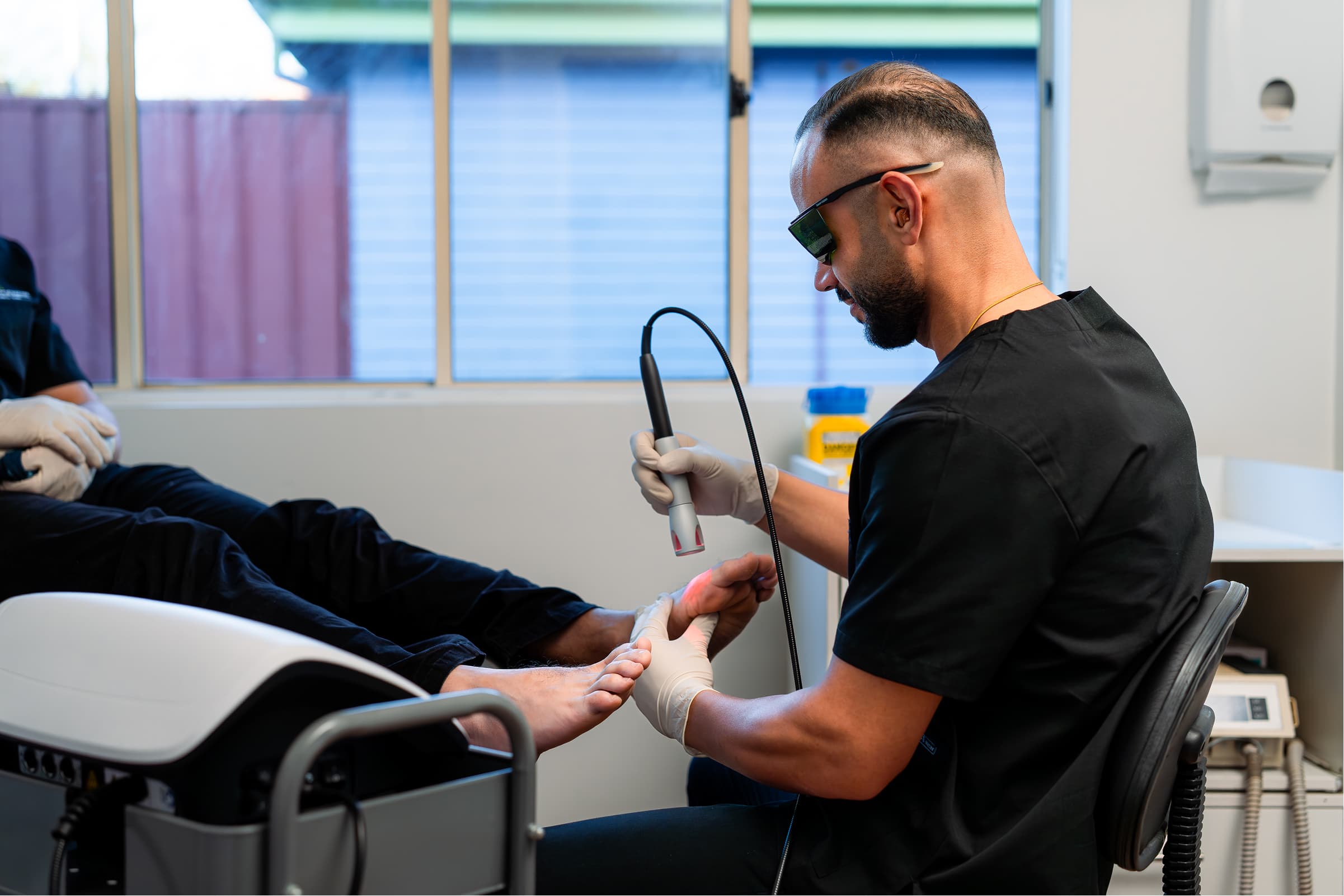
- Toe splints & digital props - passively straightening the toe during activity to slow progression in flexible cases
- Padding & offloading - silicone or foam padding protecting the bony prominence and preventing corns and callus
- Corn & callus management - regular debridement to prevent skin breakdown and pain
- Footwear advice - wider toe-box footwear with adequate depth to accommodate the deformity without rubbing
- Intrinsic muscle strengthening - exercises to improve toe mechanics in flexible cases
- Custom foot orthotics - addressing contributing factors, particularly flat feet or forefoot overload
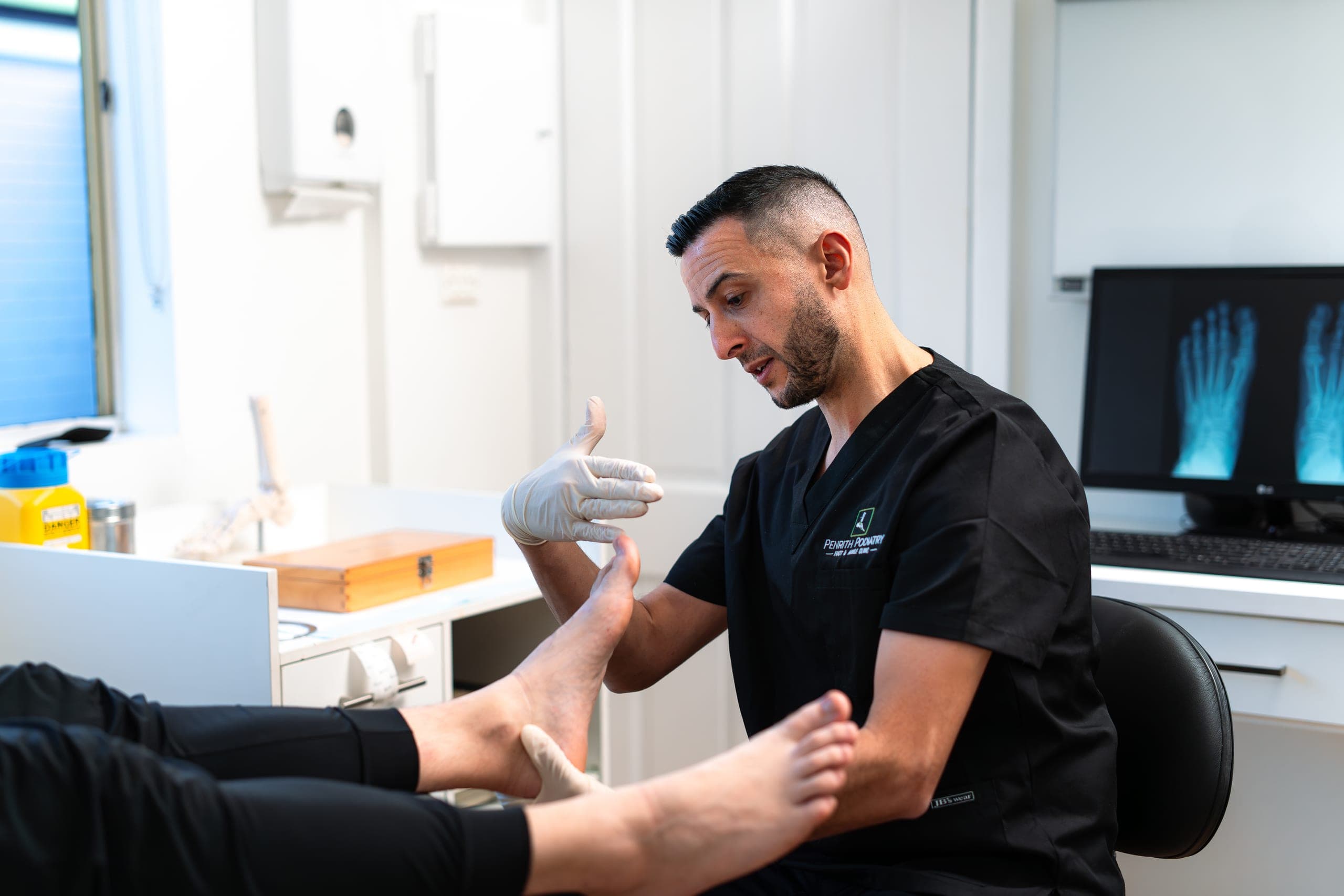
Conservative care does not straighten a rigid hammer toe - it manages symptoms and reduces further progression.
When Surgery Is Considered
Surgery is considered when the deformity has become rigid and significantly affects footwear or function, when conservative measures no longer control pain or skin complications, or when the hammer toe is causing secondary problems like plantar plate tears or adjacent-toe crowding. Options include joint arthroplasty (removing a small section of bone to allow straightening), tendon lengthening, or fusion of the affected joint, depending on rigidity and associated pathology.
Hammer Toes FAQs
Can hammer toes be straightened without surgery?
Flexible hammer toes can be improved with splinting and conservative management. Rigid hammer toes, where the joint can no longer be manually straightened, require surgery to correct the deformity structurally.
Do hammer toes always get worse?
Without management, most do progress from flexible to rigid over time. Conservative treatment can slow this significantly, particularly when started early.
Are hammer toes related to bunions?
Frequently, yes. A bunion pushes the big toe inward, displacing the second toe upward and contributing to hammer toe deformity. Addressing the bunion is often an important part of management.
Will I need time off work after hammer toe surgery?
It depends on your occupation. Office-based work can usually resume within 1-2 weeks; jobs requiring prolonged standing or walking may need 4-6 weeks. Your surgeon will advise based on the procedure.
Serving Penrith & Western Sydney
Penrith Podiatry Foot and Ankle Clinic is at 1/135-137 High Street, Penrith, managing hammer toe conditions for patients from Kingswood, St Marys, Emu Plains, Glenmore Park and Nepean. Early treatment of a flexible hammer toe is always easier than managing a rigid one - book online or call us.
Related conditions
Bunions
A progressive big-toe-joint deformity - managed conservatively, corrected with surgery when needed.
Learn morePlantar Plate Tears
A torn stabilising ligament under a toe joint - often mistaken for general forefoot pain.
Learn moreForefoot Pain
Pain in the ball of the foot - a symptom pattern with several causes, almost always treatable conservatively.
Learn moreRequest an appointment
Send a few details and our team will be in touch to arrange a time that suits you.
Visit the clinic
Penrith, NSW 2750