
Knee & Ankle Pain Treatment in Penrith
Pain at the knee or ankle often starts further down - in how your feet load and move. A podiatry assessment looks at the whole lower-limb chain to find why the pain is really there.
- Whole-chain assessment
- Gait analysis
- Root-cause treatment
- 60+Years Combined Experience
- 4.9Google Rating (185+)
- Specialist Podiatric Surgeon on team
- Endorsed for Scheduled Medicines
Why the Feet Matter for Knee & Ankle Pain
The feet are the foundation of the lower limb. Every step sends load up through the ankle, knee, hip and back, so the way your feet strike and roll directly influences the forces those joints have to absorb. When foot mechanics are off, the knee and ankle often pay the price.
This is why knee and ankle pain that hasn't responded to treatment aimed only at the joint itself can improve dramatically once the foot mechanics driving it are addressed. Podiatry looks at the whole chain, not just the sore spot.

Common Mechanical Contributors
A range of foot-driven factors can overload the knee and ankle:
Overpronation
excessive inward roll that rotates the shin and stresses the knee
High or flat arches
altering how load is distributed through the limb
Leg-length or alignment differences
changing load through one side
Muscle imbalance & weakness
reducing control at the knee and ankle
Unsuitable footwear
failing to support the foot for your activity
Symptoms to Look Out For
Activity-related pain
knee or ankle pain that flares with walking, running or stairs.
Instability
a sense of the ankle giving way or the knee feeling unstable.
End-of-day ache
joints that ache after time on your feet.
Recurring niggles
the same joint pain returning despite previous treatment.
How We Assess It
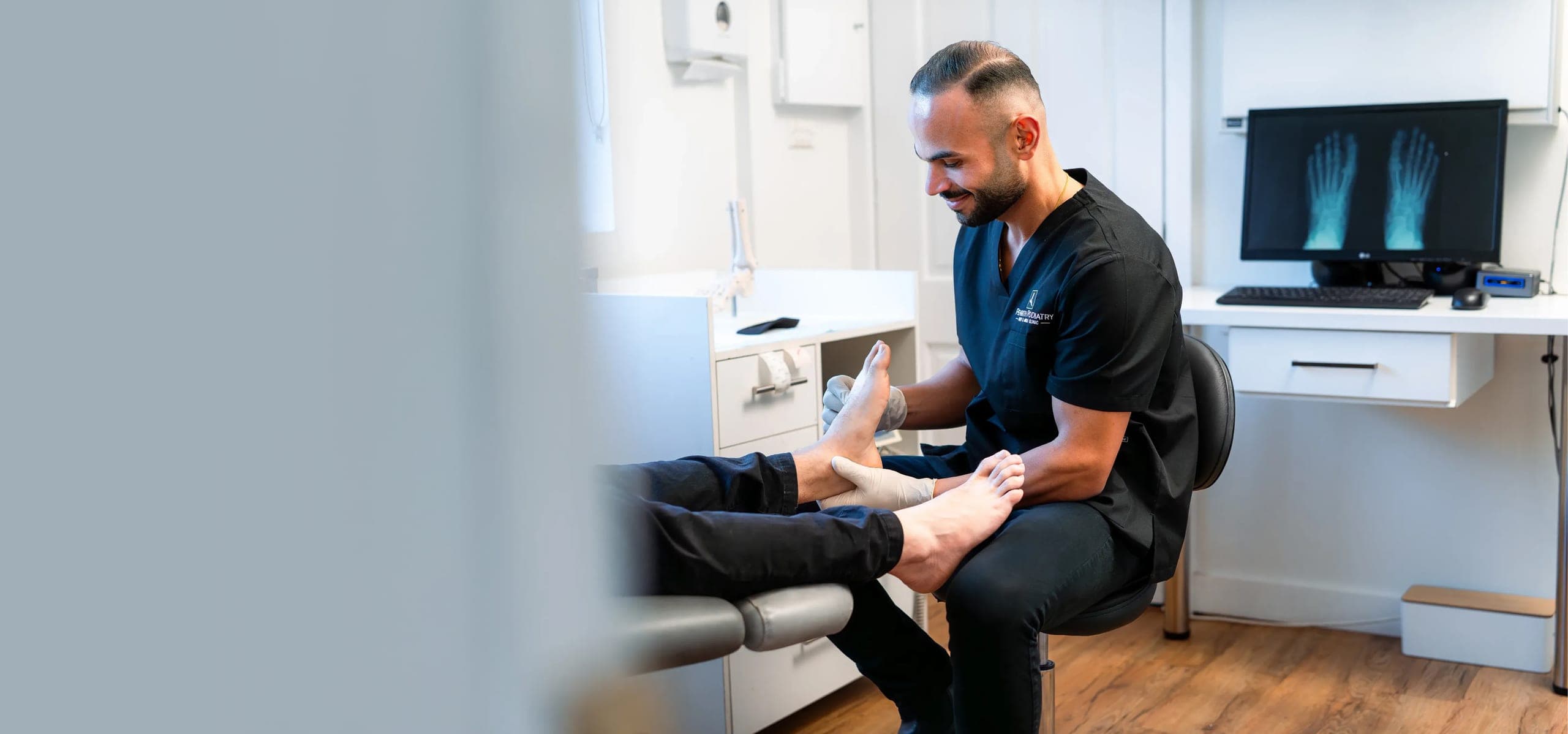
Because knee and ankle pain has many possible sources, a thorough assessment is key. It includes:
History
when the pain started, what aggravates it, and previous treatment.
Gait & biomechanics
how you stand, walk and load the whole limb.
Joint & muscle examination
range, strength and control at the foot, ankle and knee.
Diagnostic ultrasound
in-clinic imaging of soft-tissue structures where useful.
Referral where needed
coordination with GPs, physiotherapists or specialists for joint-specific issues.
Conservative Treatment Options
Where foot mechanics are contributing to knee or ankle pain, addressing them can make a real difference. Treatment may include:
- Custom orthotics - prescribed to improve alignment and reduce load through the painful joint
- Footwear guidance - matching shoes to your foot type and activity
- Strengthening & rehab - targeted work to improve control at the ankle, knee and hip
- Load management - adjusting activity to let irritated tissue settle
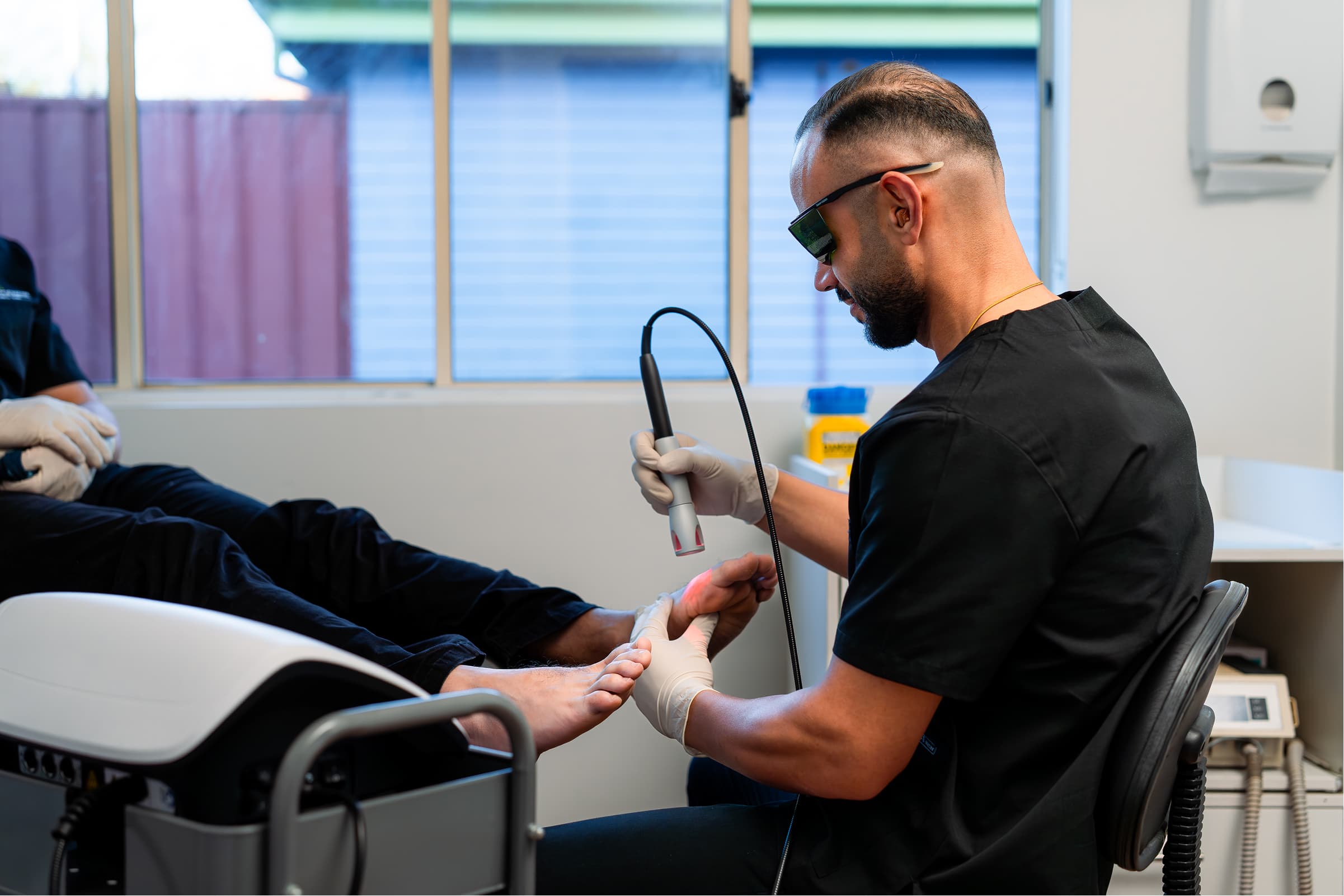
- Shockwave or injection therapy - for specific soft-tissue problems where indicated
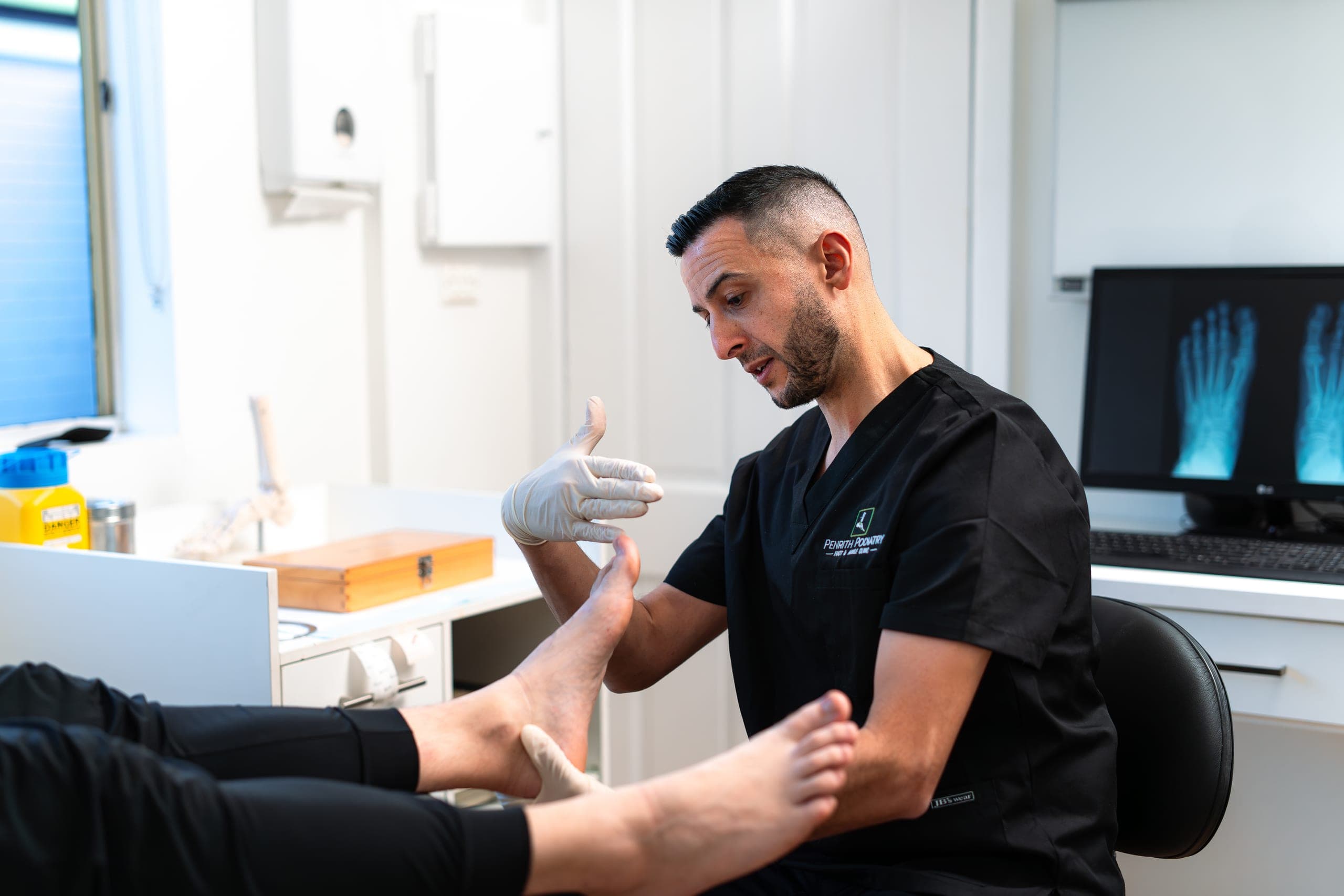
Because knee and ankle pain is multi-factorial, treatment is tailored after assessment - and we coordinate with other practitioners when the joint itself needs their input.
When It Needs More
Some knee and ankle pain arises from problems within the joint - such as significant arthritis, ligament or cartilage injury - that sit outside podiatry alone. When our assessment points that way, we refer you to the right practitioner, and where a foot or ankle problem may need surgical input we have a Registered Specialist Podiatric Surgeon on the team.
Knee & Ankle Pain FAQs
Can a podiatrist really help my knee pain?
Often, yes - when the knee pain is being driven by how your feet load and move. By correcting foot mechanics with orthoses, footwear and strengthening, we can reduce the forces overloading the knee. If the problem is within the knee joint itself, we'll direct you to the right practitioner.
How do you know if my pain comes from my feet?
A full lower-limb assessment - including gait and biomechanical analysis - tells us how load travels up the chain and whether foot mechanics are contributing. That's the difference between treating the symptom and treating the cause.
Do I need a referral?
No. You can book a lower-limb assessment directly. If you've already seen a GP or physiotherapist, bring any findings or imaging - it helps us build the full picture.
Will I need orthotics forever?
Not necessarily. Sometimes orthoses are a longer-term support; other times they're used while strength and mechanics improve. We'll be clear about their role in your specific case.
Serving Penrith & Western Sydney
If knee or ankle pain keeps returning, the answer may be at your feet. Book a whole-chain assessment at our Penrith clinic - we see patients from across Kingswood, St Marys, Glenmore Park, Emu Plains and the Blue Mountains.
Related conditions
Flat Feet
Reduced or absent arches - often harmless, sometimes progressive. Assessment tells you which.
Learn moreAnkle Instability
An ankle that keeps giving way after a sprain - rehab resolves most cases, surgery stabilises the rest.
Learn morePTTD
Progressive failure of the tendon that supports the arch - early diagnosis avoids reconstruction.
Learn moreRequest an appointment
Send a few details and our team will be in touch to arrange a time that suits you.
Visit the clinic
Penrith, NSW 2750