
Diabetic Foot Ulcer Care in Penrith
A wound on a diabetic foot needs prompt, specialist attention. Most diabetic foot complications are preventable - regular podiatry care and early management protect your feet and your mobility.
- High-risk foot assessment
- Wound care & offloading
- Specialist referral network

- 60+Years Combined Experience
- 4.9Google Rating (185+)
- Specialist Podiatric Surgeon on team
- Endorsed for Scheduled Medicines
What Is a Diabetic Foot Ulcer?
A diabetic foot ulcer is an open wound or sore on the foot that occurs in people living with diabetes. Without appropriate management it can lead to infection, hospitalisation and, in severe cases, amputation.
Diabetes damages nerves (peripheral neuropathy) and blood vessels (peripheral arterial disease) in the feet over time. This combination means even minor injuries or pressure points may go unnoticed and unhealed, progressing to an ulcer that is very difficult to close without specialist intervention.
In Australia, diabetes-related foot complications are a leading cause of non-traumatic lower-limb amputation - yet the vast majority are preventable with regular podiatry care and early management.

Why People with Diabetes Are at Higher Risk
Several factors combine to raise the risk:
Peripheral neuropathy
reduced sensation means injuries go undetected and worsen without pain as a warning
Peripheral arterial disease
reduced blood flow impairs healing, so even small wounds may fail to close
Impaired immunity
diabetes makes infection more likely and harder to control once established
Structural changes
muscle imbalance and toe deformity create predictable pressure hotspots where ulcers develop
Symptoms and Warning Signs
People with diabetic neuropathy may not feel an ulcer developing, so regular visual inspection is essential. If you have diabetes and notice any of these, seek assessment promptly - ulcers do not follow the usual 'wait and see' rule:

Open wound
An open sore or wound, particularly under the ball of the foot, heel, or over bony prominences
Dark under callus
Callus or corn with dark or soft tissue underneath
Redness & warmth
Redness, warmth, or swelling around a wound
Discharge or odour
Discharge or odour from the foot
Discoloured skin
Blackened or discoloured skin (requires urgent attention)
Unexplained swelling
Swelling of the entire foot without obvious cause

Assessment and Risk Classification
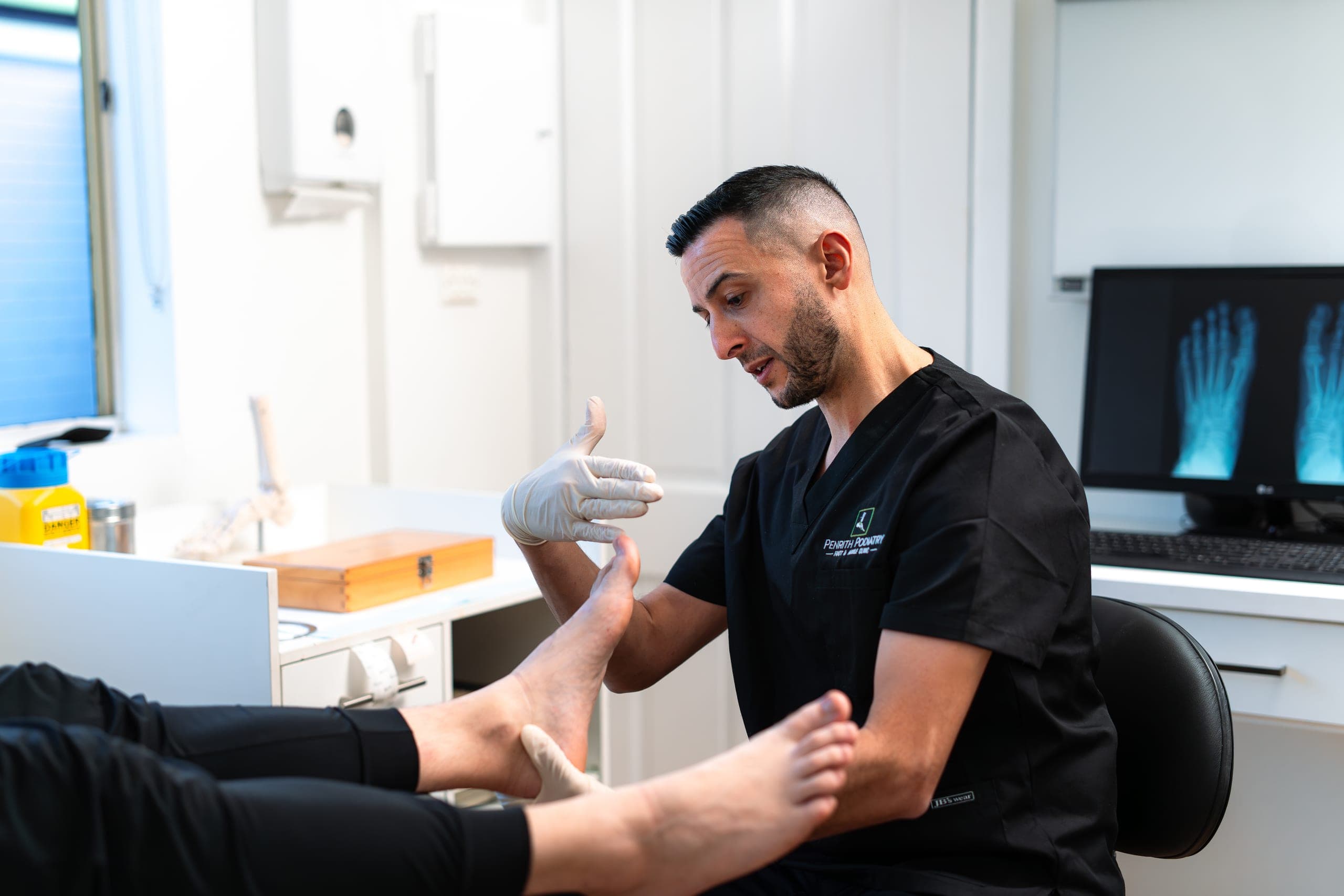
Everyone with diabetes should have a regular foot assessment to identify their risk level. Assessment at Penrith Podiatry includes:
Neurological testing
monofilament, vibration and proprioception
Vascular assessment
Doppler and ankle-brachial index (ABI)
Structure & pressure
foot structure and pressure-distribution analysis
Skin & nail check
and grading of any wound present
Footwear review
identifying pressure from footwear
Specialist referral
coordinated input where indicated
Conservative Management
Treatment is focused on healing the wound and preventing recurrence:
- Wound debridement - regular removal of dead, callused or infected tissue to stimulate healing
- Appropriate dressings - selected for wound type, moisture level and infection status
- Offloading - total contact casting or offloading footwear - eliminating pressure from the wound is the most important factor in healing
- Blood glucose optimisation - elevated glucose significantly impairs healing; we liaise with your GP or endocrinologist as needed
- Therapeutic footwear & insoles - reducing peak pressure at high-risk sites
- Patient education - foot inspection routines, footwear checks, nail care and recognising early warning signs
When Hospital or Surgical Management Is Required
For ulcers with deep infection, osteomyelitis, critical limb ischaemia, or failure to respond to conservative care, escalation may include intravenous antibiotics, surgical debridement, vascular surgery to restore blood flow, or partial amputation as a limb-salvage procedure. We maintain strong referral networks with the relevant medical specialists.
Prevention Is the Priority
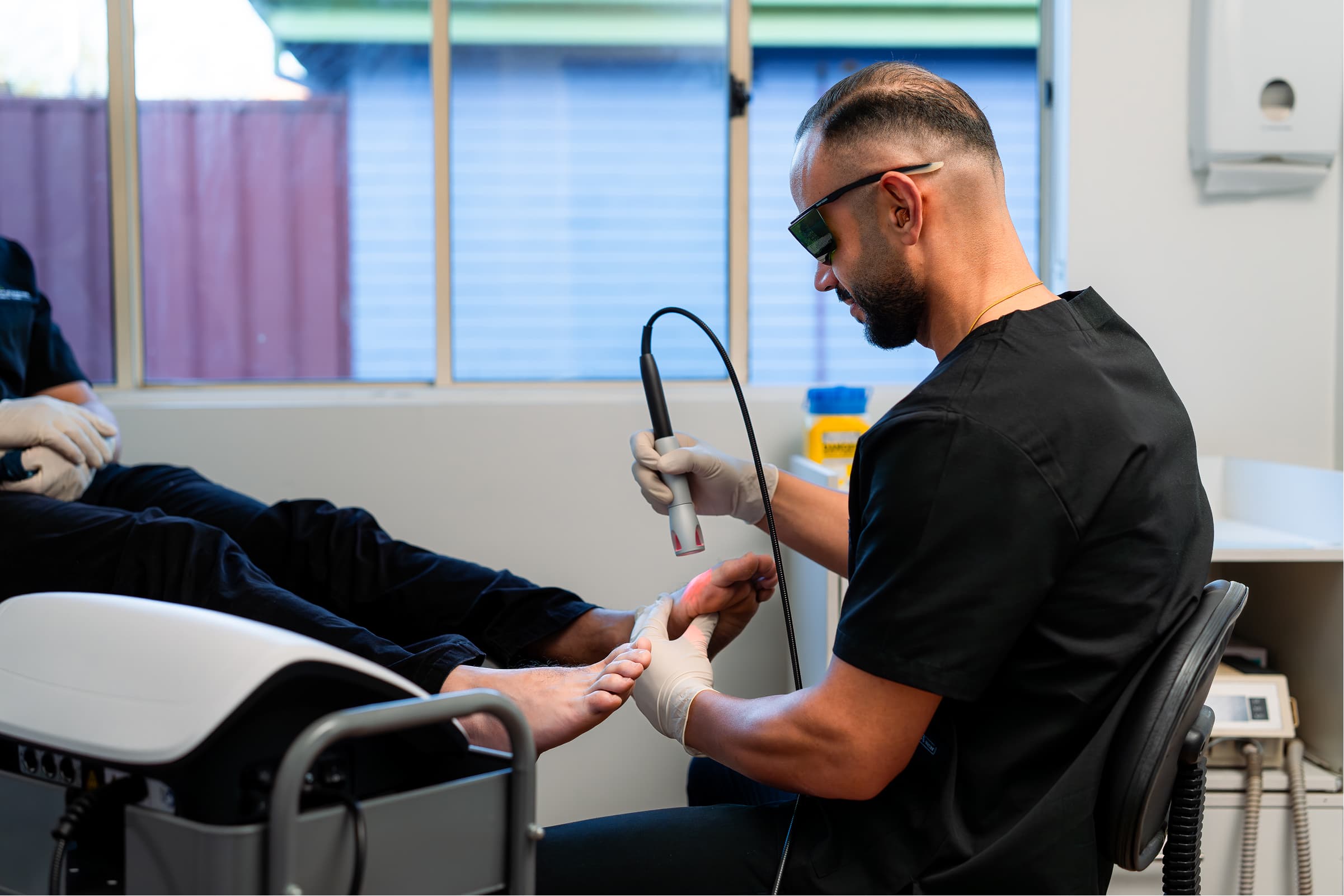
For people with diabetes, preventing an ulcer is always preferable to treating one. Prevention means regular podiatry review, daily foot inspection at home, appropriate footwear at all times, prompt attention to any new skin changes, and blood glucose management in partnership with your GP.
Diabetic Foot Ulcers FAQs
How often should someone with diabetes see a podiatrist?
It depends on risk classification. Low-risk patients are generally reviewed annually. Patients with neuropathy, peripheral vascular disease, or a history of ulceration need more frequent review - sometimes every 6-8 weeks.
My foot ulcer isn't painful. Does that mean it's healing?
Not necessarily. Lack of pain is often a sign of neuropathy rather than healing. A painless ulcer may still be infected, deepening or failing to close, and must still be assessed and managed.
Can a diabetic foot ulcer be treated by my GP alone?
GPs play an important role, but diabetic foot ulcers require specialist podiatric wound care including debridement, offloading and vascular assessment. Your GP and podiatrist should be working together.
What does a diabetic foot ulcer look like?
They vary from a shallow break in the skin to a deep wound with surrounding callus. Early ulcers may look like a small red spot or blister at a pressure point. Any open wound on a diabetic foot warrants prompt assessment.

Serving Penrith & Western Sydney
Penrith Podiatry Foot and Ankle Clinic is at 1/135-137 High Street, Penrith, providing high-risk foot care for patients from Kingswood, St Marys, Emu Plains, Glenmore Park and Nepean. If you have diabetes and haven't had a recent foot check, book a diabetic foot assessment online or call us today.
Request an appointment
Send a few details and our team will be in touch to arrange a time that suits you.
Visit the clinic
Penrith, NSW 2750