Persistent Pain on Top of the Foot: Explore Potential Causes
If the top of your foot hurts every time you pull on a shoe, climb the stairs or head out for a walk, you're not alone , and you're right to take it seriously. Persistent foot pain has a way of chipping away at everything from your morning walk to a full shift on your feet.
- The quick answer: Ongoing pain on top of the foot is most often caused by midfoot or ankle arthritis (wear and inflammation of the joints) or Morton's neuroma (a thickened, irritated nerve between the toes). Each produces a distinct pattern of stinging, burning or sudden sharp pain. A podiatrist can confirm which one you have and tailor treatment accordingly.
What Does Pain on Top of the Foot Feel Like?
Pain in the top of the foot rarely feels the same from one person to the next. How it feels is one of the most useful clues we have. Most of our patients describe one or more of these:
- A sting of pain that catches you as you step off or bend your toes
- Sharp, burning sensations that spread across the top of the foot or into the toes
- Sudden, explosive pain, which is an electric, shooting jolt that seems to come from nowhere
- A deep, nagging ache that's worse first thing in the morning or after rest
- Swelling, stiffness or a bony bump across the middle of the foot
If you're getting sharp pain on top of feet when walking, it's usually because each step loads the joints and squeezes the nerves in the forefoot. That's why these two culprits top our list.
Cause #1: Morton's Neuroma
Morton's neuroma is a thickening of the tissue around a small nerve running between the long bones of the forefoot, most often between the third and fourth toes. When that nerve is repeatedly squeezed, it becomes irritated, inflamed and enlarged.
What Causes Morton's Neuroma?
It comes down to pressure and compression on the nerve. Common contributors include:
- Narrow, pointed or tight-fitting shoes that squash the toes together
- High heels, which shift your body weight onto the forefoot
- High-impact activity such as running, netball or court sports
- Foot structure, such as bunions, hammertoes, flat feet or high arches
It's more common in women, largely due to footwear, and is often seen in people aged 40–60.
How It Matches Your Symptoms
Because a neuroma is a nerve problem, the pain is distinctly nervy. It typically starts in the ball of the foot but can radiate into the toes and across the top of the foot. Look out for:
- Burning, stinging or electric shocks into the toes
- Sudden, explosive pain that eases when you take your shoe off and rub your foot
- Pins and needles or numbness between the toes
- The odd feeling of a pebble or a bunched-up sock under your foot
Learn more about Morton's neuroma treatment in Penrith.
Cause #2: Midfoot and Ankle Arthritis
The top of your foot is home to a cluster of small joints that link the midfoot to the ankle. Arthritis develops when the smooth cartilage cushioning these joints wears down or becomes inflamed, leaving bone to rub on bone.
Common Types of Foot Arthritis
- Osteoarthritis: gradual "wear and tear", often after years of load or an old injury
- Post-traumatic arthritis: Develops after a sprain, fracture or Lisfranc injury
- Inflammatory arthritis: rheumatoid arthritis or gout
How It Matches Your Symptoms
Arthritis pain is a joint pain rather than a nerve pain. You may notice:
- A deep ache across the top of the midfoot, especially first thing in the morning
- Pain on top of foot when walking, particularly uphill, on stairs or on hard surfaces
- Stiffness, swelling and warmth over the joints
- A bony lump that rubs against your shoe laces
- Sharp, stinging flare-ups after a big day on your feet
Find out how we manage ankle arthritis in Penrith.
Neuroma or Arthritis? A Quick Comparison
| Morton's Neuroma | Midfoot / Ankle Arthritis | |
|---|---|---|
| Type of pain | Burning, electric, shooting | Deep ache, stiffness, sharp flare-ups |
| Where it's felt | Ball of foot, toes, can radiate to top | Top of the midfoot and ankle |
| Numbness or tingling | Common | Uncommon |
| Worst when | In tight shoes or heels | Mornings, after rest, on stairs |
| Eases with | Removing shoes, massaging the foot | Gentle movement, supportive footwear |
Why You Need a Formal Diagnosis From a Podiatrist
It's tempting to search for your symptoms and self-treat, but the two conditions overlap , and so do others. Stress fractures, extensor tendonitis, nerve entrapment and gout can all cause a foot hurting on top. Treating the wrong condition can delay recovery or make things worse.
At Penrith Podiatry Clinic, every treatment plan starts with a thorough assessment by a qualified, AHPRA-registered podiatrist. This may include:
- A detailed history of your pain, activity and footwear
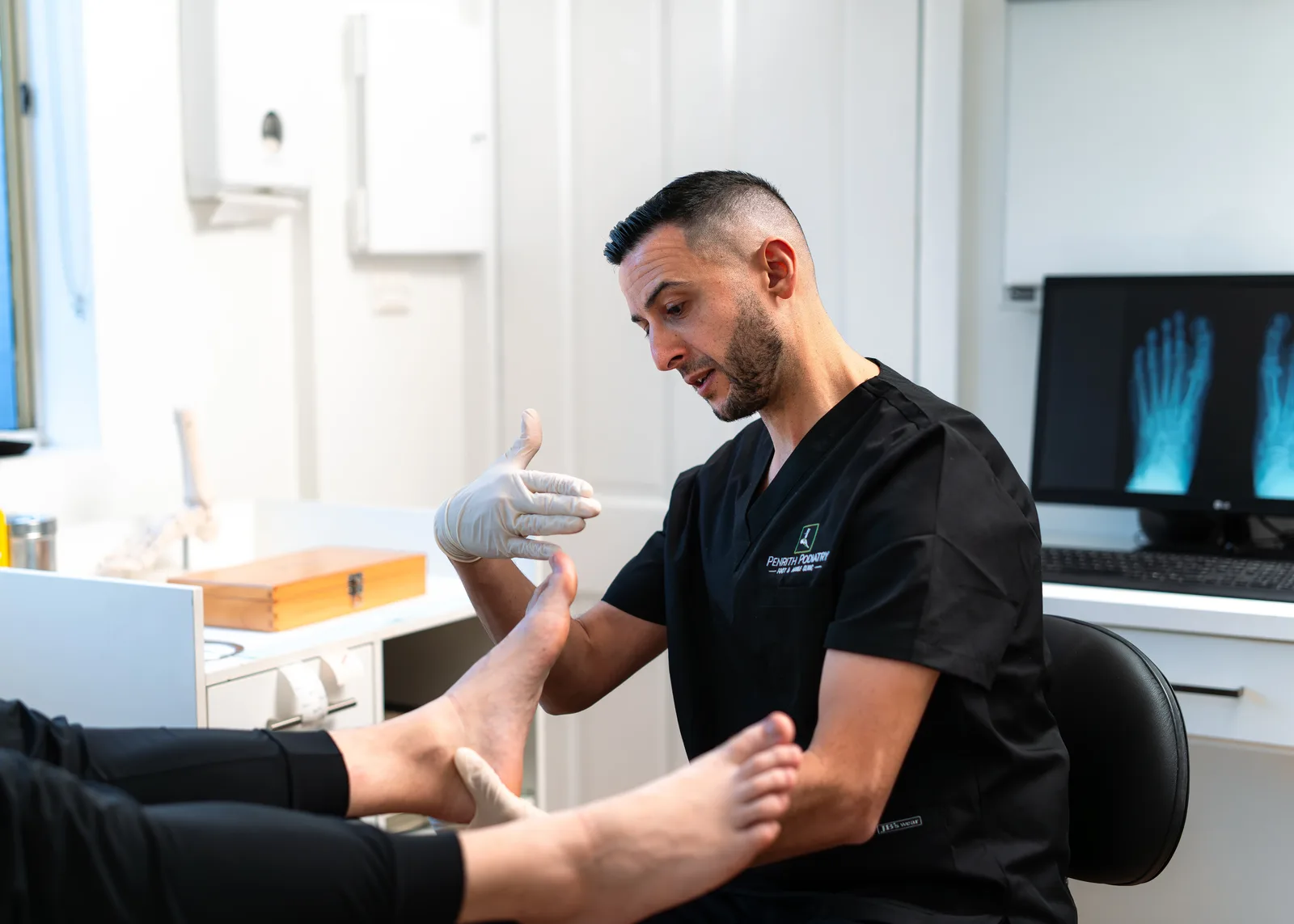
- Hands-on examination, including specific tests such as squeezing the forefoot to check for a neuroma
- Gait and biomechanical analysis to see how your foot moves and loads
- Referral for imaging (X-ray or ultrasound) when needed to confirm the diagnosis
See a podiatrist promptly if you notice:
- Pain lasting longer than two weeks
- Swelling, redness or heat that won't settle
- Numbness or tingling in your toes
- Pain that wakes you at night or stops you walking normally
- Diabetes or poor circulation alongside any foot pain
How to Get Rid of Pain on Top of Foot
Once we know exactly what's behind your pain, we can target it directly. Most patients improve with conservative, non-surgical care.
Simple Steps You Can Start at Home
- Swap to shoes with a wide, deep toe box and a low heel
- Loosen or re-lace your shoes to take pressure off the top of the foot
- Rest from high-impact activity and choose low-impact options like swimming or cycling
- Ice the painful area for 10–15 minutes after activity to settle inflammation
These steps can ease symptoms, but they won't resolve the underlying cause on their own.
Why See a Podiatrist for Treatment?
Home care eases symptoms, but it rarely fixes the cause. A podiatrist can:
- Confirm the diagnosis, so you're not treating the wrong condition
- Identify what's driving it, such as footwear, foot structure or how you walk
- Prescribe targeted care, like custom orthotics, offloading padding or shockwave therapy
- Track your progress and adjust treatment before the problem worsens
If your pain isn't settling, book an assessment with a podiatrist.
Get Answers and Relief at Penrith Podiatry Clinic
Living with a foot that hurts on top is exhausting, but you don't have to keep guessing. Our experienced podiatrists will find the true cause of your pain, explain it in plain language and guide you through a treatment plan designed to get you moving comfortably again.
Ready to take the first step? Contact Penrith Podiatry Clinic today!
Frequently Asked Questions
Why Does the Top of My Foot Hurt When I Walk?
Walking loads the midfoot joints and compresses the nerves in the forefoot with every step. Arthritis and Morton's neuroma are the most common reasons for pain on top of foot when walking, though tendon irritation and stress fractures are also possible.
Can Tight Shoes Cause Pain On Top of the Foot?
Yes. Tight laces press on the tendons and joints across the top of the foot, while narrow toe boxes squeeze the nerves between the toes , a key trigger for Morton's neuroma.
Will Pain On Top of My Foot Go Away On its Own?
Mild strain may settle with rest and better footwear. Pain lasting more than two weeks, or burning, numbness or swelling, usually needs professional assessment.
Do I Need a Referral to See a Podiatrist in Penrith?
No. You can book directly with Penrith Podiatry Clinic. If you have a chronic condition, ask your GP whether you're eligible for a Medicare-subsidised care plan.
Explore related conditions & services
Morton's Neuroma
Burning, shooting forefoot pain like walking on a pebble - a compressed, thickened nerve.
Learn moreAnkle Arthritis
Cartilage wear in the ankle joint - conservative care preserves function and slows progression.
Learn moreFoot & Ankle Assessment
Comprehensive biomechanical and clinical evaluation to pinpoint the root cause of foot, ankle and lower-limb pain.
Learn moreOrthotic Therapy
Custom-prescribed orthoses to offload, support and correct the foot mechanics driving your pain.
Learn more
Have a foot or ankle concern?
Reading up is a good start - but nothing beats a proper assessment. Book in and we'll diagnose the cause and map out a plan. Serving Penrith and the wider Western Sydney region.