
Heel Pain in the Morning? How to Tell if It's Plantar Fasciitis
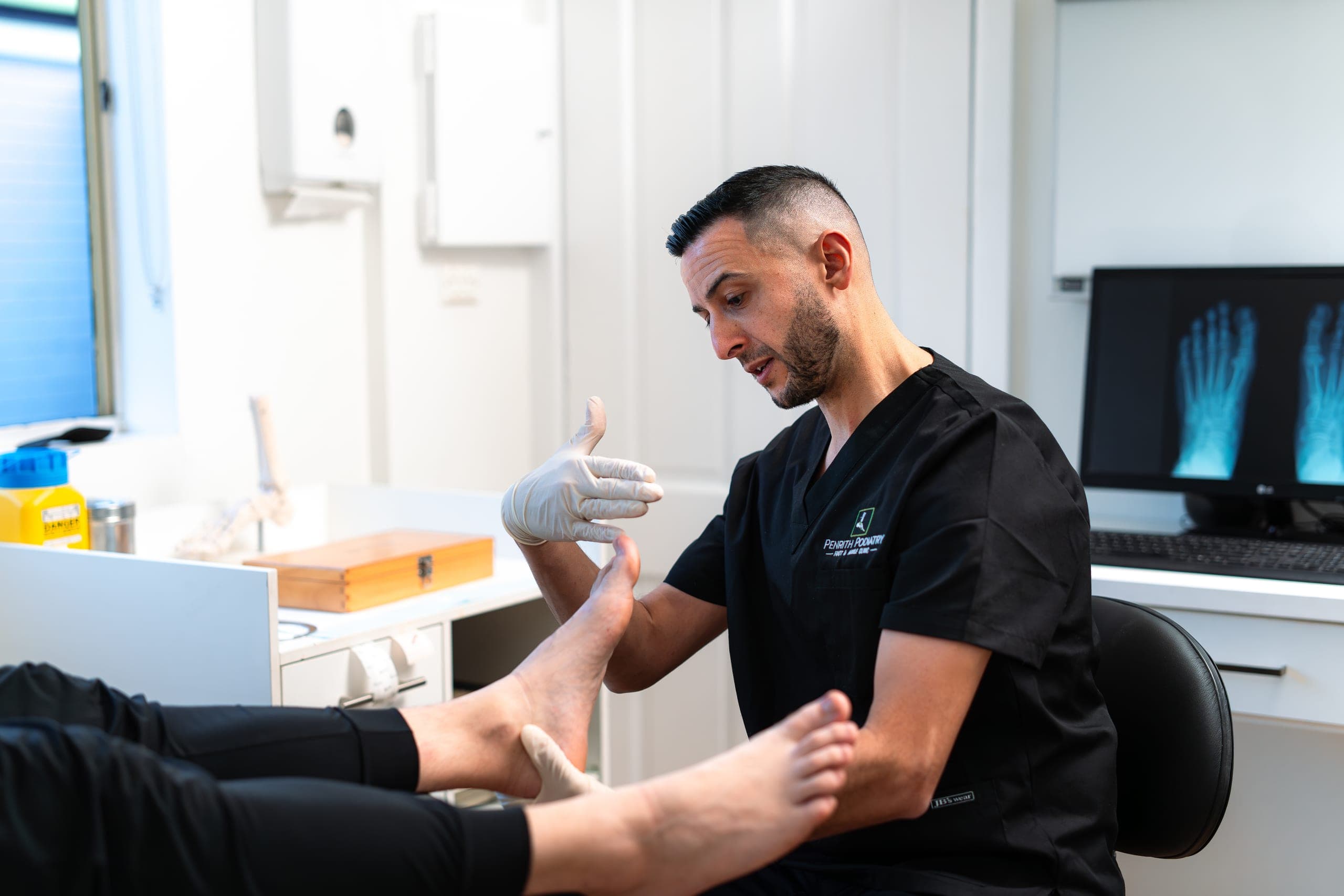
If your worst heel pain is in the first few steps out of bed and eases as you get moving, there's a good chance it's plantar fasciitis - the most common cause of heel pain we see. But 'heel pain' isn't a diagnosis on its own, and treating the wrong thing is exactly why it so often drags on for months.
The classic plantar fasciitis pattern
The plantar fascia is a thick band of tissue running along the sole of your foot, from the heel to the toes. When it becomes overloaded and irritated where it attaches to the heel, it produces a very recognisable pattern of pain.
- First-step pain: sharp pain under the heel in your first steps in the morning, or after sitting for a while
- Eases with movement: the pain warms up and settles after a few minutes of walking
- Worse after activity: it often returns later in the day, especially after being on your feet
- Tender spot: pressing the inside of the heel bone reproduces the pain
When it might be something else
Not all heel pain is plantar fasciitis. Pain that is more towards the back of the heel can be Achilles-related. Burning, tingling or numbness points more to a nerve. Deep, constant pain that is worse with impact - particularly in runners - can occasionally be a stress-related bone injury. And in active, growing children, heel pain is usually a growth-plate issue rather than fasciitis.
This is why an accurate diagnosis matters. The treatment for each of these is different, and getting it wrong wastes months.
What actually helps
Genuine plantar fasciitis responds well to the right plan - but rest and stretching alone often aren't enough, because they don't address the load and mechanics driving it.
- Load management: adjusting activity so the tissue can settle, without shutting down completely
- Targeted strengthening: progressive loading of the fascia and calf is one of the most effective measures
- Footwear & offloading: supportive shoes and, where useful, prescribed orthoses to reduce strain
- Advanced therapy for stubborn cases: shockwave therapy or an ultrasound-guided injection when it hasn't responded to first-line care
When to get it looked at
If heel pain has hung around for more than a few weeks, keeps returning, or isn't improving with supportive shoes and easing off activity, it's worth having assessed. The sooner the actual cause is identified, the faster it can be turned around - and the less likely it is to become a long-standing problem.
Explore related conditions & services
Heel Pain
Sharp morning heel pain or a dull daily ache - diagnosed with in-clinic ultrasound and treated.
Learn morePlantar Fasciitis
The most common cause of heel pain - inflammation of the tissue along the sole of the foot.
Learn moreAchilles Tendon Pain
Stiff, aching pain in the Achilles tendon - a loading problem that responds to structured rehab.
Learn moreHeel Pain Treatment
A staged, evidence-based programme for plantar fasciitis and persistent heel pain that hasn't settled.
Learn moreShockwave Therapy
Non-invasive shockwave (ESWT) for stubborn heel pain, plantar fasciitis and chronic tendinopathy.
Learn moreOrthotic Therapy
Custom-prescribed orthoses to offload, support and correct the foot mechanics driving your pain.
Learn more
Have a foot or ankle concern?
Reading up is a good start - but nothing beats a proper assessment. Book in and we'll diagnose the cause and map out a plan. Serving Penrith and the wider Western Sydney region.