Foot Corn: Causes, Early Signs, and When to See a Podiatrist
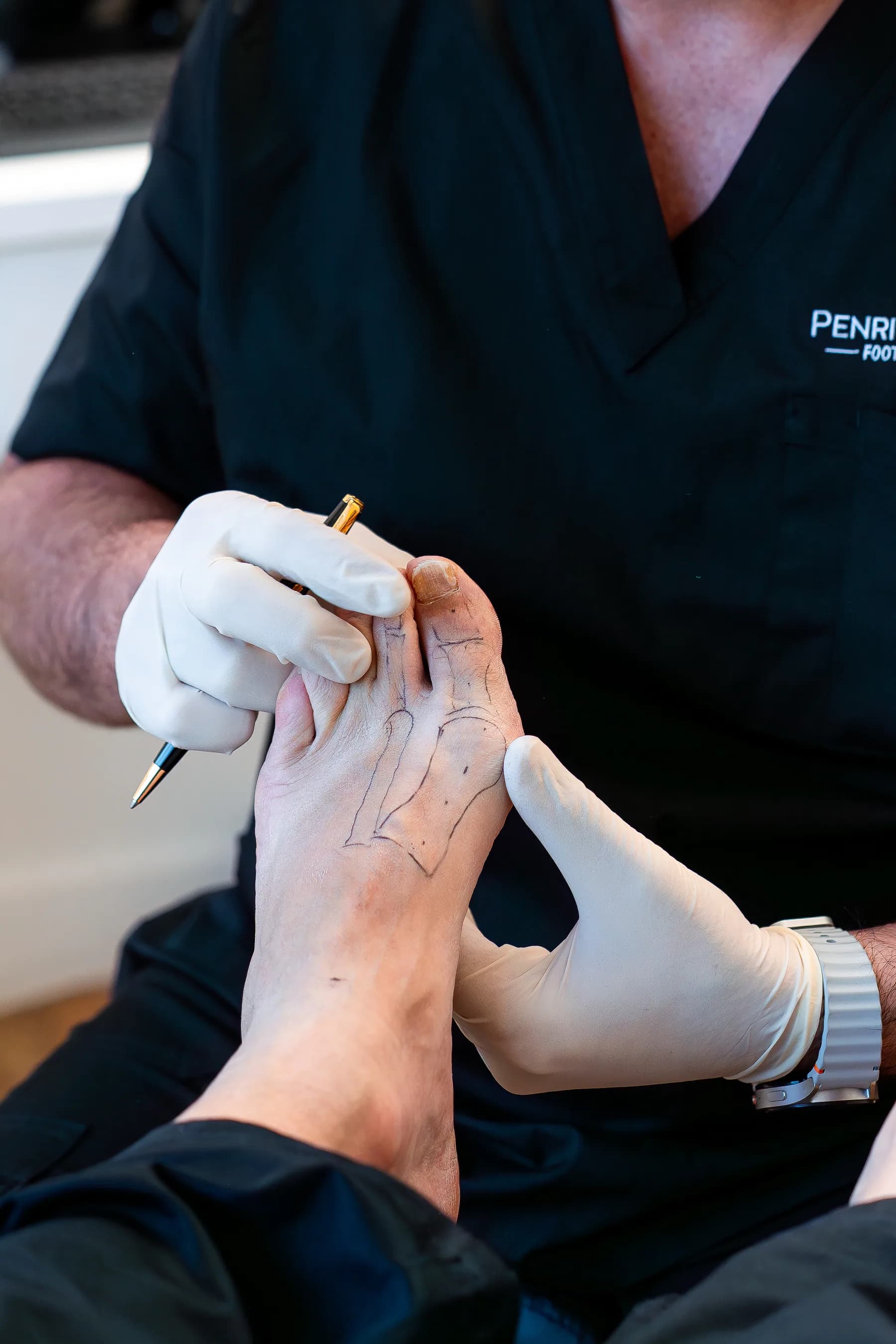
A foot corn is one of the most common conditions we treat at Penrith Podiatry Clinic, and also one of the most misunderstood. Many people put up with the discomfort for months — or try to fix it at home — without realising that a few minutes with a podiatrist can resolve it safely and effectively.
Whether you've noticed a small, tender patch on your toe or you've been dealing with a corn on foot that keeps coming back, this guide covers everything you need to know: what it is, why it forms, how to spot the early signs, and when it's time to seek professional care.
What is a foot corn?
A foot corn is a small, concentrated area of thickened, hardened skin that develops in response to repeated pressure or friction. The skin builds up as a protective response — essentially, your body trying to shield itself from ongoing irritation.
Unlike a callus, which tends to spread across a broader area, a corn is typically small and circular with a dense, hard centre (called the "nucleus"). When you press on it, that nucleus pushes inward against sensitive tissue beneath the skin — which is what causes the sharp, pinching pain that many people describe.
Corns most commonly form on the tops and sides of the toes, and less frequently on the ball or heel of the foot. They can appear on anyone, at any age.
Key point: A corn foot condition is not dangerous on its own, but it can become painful, affect how you walk, and lead to complications if left untreated — particularly for people with diabetes or poor circulation.
Types of corns on the foot
Not all foot corns are the same. Understanding which type you have helps inform the right treatment approach.
- Hard Corn (Heloma Durum): A small, firm lump with a dense centre. Usually found on the tops of toes or the outer edge of the little toe. Caused by shoe pressure rubbing against bony areas.
- Soft Corn (Heloma Molle): White or grey in colour with a rubbery texture. Found between the toes where moisture is trapped. Often more painful than hard corns due to maceration of the surrounding skin.
- Seed Corn (Heloma Miliare): Very small corns that appear in clusters, typically on the ball or heel of the foot. Often linked to dry skin conditions rather than direct friction.
- Vascular or Neurovascular Corn: Contains nerve endings and/or blood vessels. Particularly painful and should only be treated by a podiatrist — never attempt home removal of this type.
Early stage corn on foot: what to look for
Catching a corn on foot early makes treatment simpler and prevents the condition from becoming more painful. Here's what to look for at the early stages.
- A small, tender patch of skin that feels harder or thicker than the surrounding area
- A slightly raised bump or lump on the toe or foot, particularly where shoe pressure is greatest
- Sensitivity or mild pain when pressure is applied directly to the area
- A yellowish or pale tinge to the skin in a localised spot
- Skin that looks shiny or feels rough to the touch
- Mild redness or irritation around the affected area
At the early stage, a corn on foot may not cause significant discomfort, which is why many people don't realise they have one. The area may just feel slightly rough or uncomfortable in certain shoes. Over time, as pressure continues, the hard centre deepens and the pain becomes more noticeable with each step.
Don't ignore early signs: A corn that is caught early is much easier to treat and less likely to recur. If you notice a hard, tender patch on your foot, book a podiatry assessment before it progresses.
Foot corn causes
Understanding foot corn causes is essential — not just for treatment, but for preventing the same corn from returning. Corns form because of sustained, repetitive pressure or friction on a specific point of the foot. That pressure can come from several sources.
The most common causes include:
- Ill-fitting footwear: Shoes that are too tight, too narrow, or too shallow force the toes against the material, creating the friction that leads to corns. High heels are a particularly common culprit as they shift body weight forward onto the toes.
- Walking without socks: Socks provide a cushioning layer between skin and shoe. Without them, friction is greatly increased.
- Foot deformities: Conditions like hammertoes, bunions, or claw toes cause bony prominences that rub against the inside of shoes, creating constant pressure points.
- Bony foot structure: Some people naturally have feet with less cushioning or prominent bones, making them more susceptible to corns without any footwear issue.
- Repetitive activities: Running, extended walking, or occupations that require prolonged standing can create cumulative friction that builds into a corn over time.
- Ageing: The fat pads in the foot naturally thin with age, reducing the natural cushioning between the skin and underlying structures.
- 3 in 10: Australians experience foot corns or calluses at some point in their life
- 80%: of cases are directly linked to poorly fitting footwear
- 2x: more common in women, largely due to high-heel use
Corn on foot vs. callus: what's the difference?
These two conditions are frequently confused because they're both caused by friction and both result in thickened skin. Here's how to tell them apart.
- Size: Corn on foot: Small and localised. Callus: Larger, spread over wider area.
- Centre: Corn on foot: Hard, defined nucleus. Callus: No distinct centre.
- Pain: Corn on foot: Sharp, pinching pain with direct pressure. Callus: Dull ache or tenderness, less acute.
- Location: Corn on foot: Tops/sides of toes, between toes. Callus: Ball of foot, heel, palm of hand.
- Shape: Corn on foot: Round, cone-shaped. Callus: Flat, irregular shape.
Both conditions warrant attention, but a corn foot typically causes more acute pain and requires more targeted treatment to resolve properly.
Treatment options for corn foot
Treatment for a corn foot condition depends on the type, severity, and any underlying causes. There is a spectrum of options, ranging from simple conservative measures through to professional podiatric care.
What a podiatrist will do
Professional treatment is the most effective and safest way to remove a corn on foot. At Penrith Podiatry Clinic, our podiatrists will:
- Debride the corn: Using a sterile scalpel, the podiatrist painlessly shaves away the hard, built-up skin, including the central nucleus. This brings immediate pain relief in most cases.
- Identify the cause: Removing the corn without addressing why it formed means it will return. Your podiatrist will assess your gait, footwear, and foot structure to identify the root cause.
- Recommend ongoing management: This may include footwear advice, padding, or custom orthotics to redistribute pressure away from the problem area.
At-home management (for mild, early-stage corns only)
For very mild, early stage corns, some conservative measures can ease discomfort while you arrange a podiatry appointment:
- Soaking the foot in warm water to soften the skin
- Using a pumice stone gently to reduce surface build-up (do not use on soft or broken skin)
- Applying non-medicated corn pads to redistribute pressure (not the chemical pads, which can damage healthy skin)
- Switching to well-fitting shoes with a wide toe box
Important: Never use acid-based or medicated corn removal products, and never attempt to cut a corn with scissors or a blade at home. These approaches risk serious skin damage, infection, and injury to deeper tissue. This applies especially to people with diabetes, poor circulation, or any numbness in the feet — see a podiatrist before attempting any self-treatment.
When to see a podiatrist for a foot corn
You should book an appointment with a podiatrist if:
- The corn is causing regular pain or affecting your walking
- The corn has returned after home treatment
- You have diabetes, peripheral neuropathy, or poor circulation
- The skin around the corn is red, warm, or showing signs of infection
- You are unsure whether you have a corn, a wart, or another skin condition
- The corn is between your toes (soft corns are harder to treat at home)
- The corn is large, deeply embedded, or very painful
Podiatrists are specifically trained in the diagnosis and treatment of foot skin conditions. A corn removal appointment is typically quick, comfortable, and provides fast relief.
How to prevent foot corns
The best way to manage a corn on foot is to prevent it forming in the first place. These practical steps reduce the main risk factors significantly.
- Choose well-fitting footwear: Your shoes should have enough room in the toe box so your toes do not press against the front or sides. Have your feet measured regularly, as foot size changes over time.
- Always wear socks: Moisture-wicking socks reduce friction and protect the skin from direct contact with the shoe interior.
- Moisturise your feet regularly: Keeping the skin supple reduces the likelihood of dry, hardened patches forming.
- Address foot deformities early: Conditions like hammertoes or bunions are easier to manage before they progress. See a podiatrist if you notice structural changes in your feet.
- Use custom orthotics if indicated: For people with structural foot problems or abnormal gait patterns, orthotics can redistribute load and eliminate the pressure points that cause corns.
- Check your feet regularly: Inspect your feet weekly, especially if you have diabetes. Catching a corn early is always easier than treating a well-established one.
Frequently Asked Questions
What is a corn foot condition, exactly?
A foot corn is a small, circular area of thick, hardened skin with a dense central core (the nucleus). It forms on the foot — usually on or between the toes — in response to repeated friction or pressure. The nucleus pushes inward against tissue beneath the skin, which causes the characteristic sharp pain when pressure is applied.
What are the main foot corn causes?
The most common foot corn causes are poorly fitting shoes (too tight or too narrow), walking without socks, foot deformities such as hammertoes or bunions, bony foot structure, ageing (which thins the natural fat pads), and repetitive activities that create prolonged friction on specific areas of the foot.
What does an early stage corn on foot look like?
An early stage corn on foot typically appears as a small, slightly raised bump or hardened patch of skin. It may be yellowish or pale in colour, feel rough to the touch, and be tender when pressed. At this stage, it may only be mildly uncomfortable — which is why many people miss it. If you notice any hard, localised patch on your toe or foot, it is worth having it assessed by a podiatrist before it deepens.
Can I remove a corn on foot myself?
You can use gentle methods like warm foot soaks and a pumice stone for early-stage surface build-up, but you should never use acid-based corn removal products or attempt to cut the corn at home. These methods risk skin damage, infection, and injury to the tissue underneath. The safest and most effective approach is professional podiatric debridement — it is quick, painless, and provides immediate relief.
Will my corn come back after treatment?
It can, if the underlying cause is not addressed. Removing the corn relieves the pain, but if the same pressure and friction continue, the skin will build up again. That's why a thorough podiatry assessment looks beyond the corn itself to the footwear, gait, and foot structure causing it — and recommends changes or orthotics to prevent recurrence.
Is corn removal covered by Medicare?
General podiatry appointments for conditions like corns are not bulk-billed under Medicare without a referral. However, if you have a chronic health condition and a GP refers you under an Enhanced Primary Care (EPC) plan, Penrith Podiatry Clinic bulk bills all EPC-eligible visits. Speak to your GP or contact the clinic to find out if you qualify.
Explore related conditions & services
Corns & Calluses
Painful hard skin and corns - painlessly removed, with the pressure that causes them addressed.
Learn moreIngrown Toenails
A nail edge growing into the skin - relieved same-day, and permanently fixable for recurrent cases.
Learn moreFoot & Ankle Assessment
Comprehensive biomechanical and clinical evaluation to pinpoint the root cause of foot, ankle and lower-limb pain.
Learn moreOrthotic Therapy
Custom-prescribed orthoses to offload, support and correct the foot mechanics driving your pain.
Learn more
Have a foot or ankle concern?
Reading up is a good start - but nothing beats a proper assessment. Book in and we'll diagnose the cause and map out a plan. Serving Penrith and the wider Western Sydney region.